Koyasan Okunoin Cemetery
The Complete Travel Guide to Japan's Largest Cemetery

Koyasan Okunoin is one of Japan's most unique and spiritual destinations. Located in the Wakayama Prefecture, Koyasan (or Mount Kōya) is a sacred mountain town that has been an important center of Buddhism for over 1,200 years.
Spending time in Koyasan offers a unique opportunity for a spiritual retreat unlike any other. Participating in the morning prayers performed by the resident monks, strolling through the ancient graveyard of Okunoin, and meditating in the serene surroundings are just a few ways to connect with the spiritual essence of Koyasan.
The town is home to more than 100 temples and the Okunoin cemetery, Japan's largest cemetery. The Okunoin cemetery is a sacred and peaceful place where over 200,000 tombstones and memorials are located.
It's the final resting place of many prominent Japanese historical figures and spiritual leaders, including Kobo Daishi, the founder of Shingon Buddhism.
Although tourism in Japan is rebounding to pre-pandemic levels, Koyasan remains off the radar of mass tourism due to its distance from Osaka and Kyoto. This makes it a perfect option for 1-2 days of slower-paced exploration.
What to see
1. Entering the Cemetery

The cemetery is a serene and picturesque place, with tall cedar trees, moss-covered tombstones, and lanterns that illuminate the paths at night. Walking through the cemetery is a spiritual journey, and visitors are encouraged to take their time, reflect, and pay their respects. At the heart of the cemetery is the mausoleum of Kobo Daishi, where it is believed he still resides in eternal meditation. It's said that Kobo Daishi is not dead, but rather in a deep state of meditation, waiting to awaken when the time is right.
2. Jizo Statues

One of the most unique aspects of the Okunoin cemetery is the thousands of small stone statues, known as Jizo, that line the paths. These statues are believed to be the guardians of children and travelers and are adorned with red bibs and hats.
Visitors can also participate in a traditional Buddhist ritual called the Mizuko Kuyo, which is performed to comfort the spirits of unborn children. The ritual involves offering water, flowers, and sweets to the Jizo statues, which represent the unborn children.
3. Torodo Hall


The Torodo Hall, also known as the Hall of Lamps, stands behind the main worship hall of Okunoin. The Torodo Hall houses over 10,000 lanterns that were donated by worshippers and pilgrims. Those lanterns have been diligently kept lit up by the Buddhist monks and locals and serve as a representation of eternal light and enlightenment.
4. Kobo Daishi's Mausoleum

Adjacent to it, Kobo Daishi's Mausoleum is the final resting place of the Kobo Daishi, one of the most influential Japanese Buddhist monk and the founder of Shingon Buddhism. It is an eternal site of meditation and worship and it is common to see visitors and pilgrims praying and chanting sutras in this area.
5. Okunoin Cemetery at Night

It is also possible to visit Okunoin cemetery during nighttime. Even though the temples inside will be closed, as the sun sets and darkness engulfs the surroundings and the atmosphere changes giving you a unique perspective of this location.
The fresh and humid air is filled with the smells of the forest and the silence amplifies the rustling of leaves and the sounds of nocturnal animals, creating a mystic ambiance. Wondering through the winding paths past Ichinohashi Bridge dimly lit by traditional lanterns can offer a unique and somewhat eerie experience.
Where to stay


When visiting Koyasan and the Okunoin cemetery, we highly recommend staying overnight in the village. By staying in Koysan you will have a lot more time, not only to further explore the cemetery but also to the many important Buddist temples in the area such as the Garan Temple Complex. Additionally, Koyasan is home to some of the most emblematic pilgrimage trails in all of Japan such as the Women Pilgrims Course or the Kohechi Trail which are definitely worth your time.
Considered one the best ryokans in the area of Wakayama, the Sojiin is a great choice for anyone who wishes to experience a high-quality traditional ryokan while visiting Koyasan. In case you’re looking for a more budget-friendly option but keeping the traditional ryokan spirit, then Fukuchi-IN might be what you’re looking for.
Stay at a Buddhist Temple
Many of the Buddhist temples offer overnight stays for pilgrims and tourists. Even though this option was not cheap, your contribution supports the lifestyle of the Buddhist monks and you are guaranteed to have a unique experience that you will never forget. The temple where we stayed, was called Koyasan Syukubou Fudouin, which included the possibility of attending the morning prayers at the temple followed by a vegetarian breakfast with the monks. It also included traditional clothes for us to use for the ceremonies, tea, and access to the beautiful garden and thermal baths.
How to get there

Koysan can be easily reached by train from Osaka’s Namba or Shin-Imamiya stations. The Nankai Railway service to Gokurakubashi station takes 1H20 to 1H40, depending on whether you can the direct train or not. The direct train costs 1720 yen and runs every 1 to 3 hours. Alternatively, you can transfer at Hashimoto Station, which has trains to Koyasan every 20 to 30 minutes. This option costs about 930 yen.
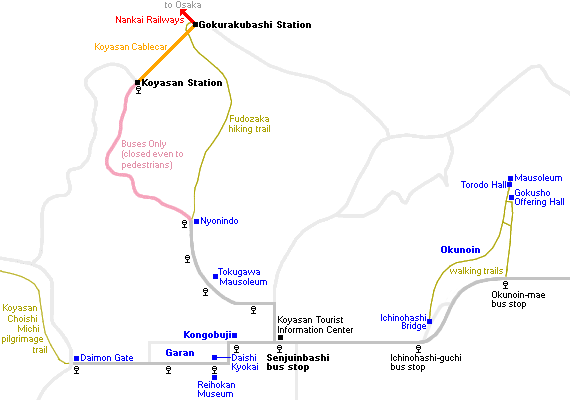
Once at Gokurakubashi station, a cablecar is available to get you to the top of the Koyasan mountain. This short and scenic ride cost about 500 yen. When you reach the top you must catch a bus that will get you to the center (Senjuinbashi bus stop) or directly to Okunoin cemetery (Okunoin-mae bus stop) for 300 yen.
Most of the path between the cablecar and the village center is restricted to buses only. If you rather walk, we suggest skipping the cablecar and using the Fudozaka hiking trail to get to hike Koyasan mountain (see map below).
Koyasan Map
Best time to visit

The best time to visit Koyasan and the Okunoin Cemetery is during the autumn months, typically from late October to November. This is when the surrounding foliage transforms into a breathtaking display of red, orange, and yellow hues, creating a stunning backdrop for exploring the sacred sites of Koyasan.
We visited during Spring, which was also a great time to be in Koyasan. The weather was mild, with fresh sunny days and the nature was blooming. Amoung the imponent cedars, many smaller trees were covered in colorful flowers that add to Koyasan beatiful scenery.
While Koyasan is a year-round destination, there are certain times to avoid, such as winter and summer. In winter, the town is covered in deep snow, making transportation challenging and some temple lodgings difficult to access.
The extreme cold can also detract from the overall experience of exploring the outdoor sites. Summer, on the other hand, can be uncomfortably hot and humid, which may make it harder to fully enjoy the tranquil environment and activities that Koyasan has to offer.
Is it worth visiting
Visiting Koyasan and the Okunoin Cemetery was an unforgettable experience. As the center of Shingon Buddhism and one of Japan's most sacred sites, Okunoin offers a profound sense of peace and reflection, transcending religious beliefs.
Staying overnight at a temple added to the richness of the cultural experience. Despite language barriers, the warm hospitality extended at every turn made us feel truly welcome. Participating in morning prayers was a highlight, leaving an indelible impression.
Surrounded by the eight peaks of Mount Koya, the village boasts tranquil forests crisscrossed by scenic walking trails leading to majestic temples and pagodas.
Whether drawn by Japanese culture, history, spirituality, or simply seeking serenity in nature, Koyasan promises a rewarding and unforgettable journey.
Disclosure: Some of the links in this post may be affiliate links. This means that if you click on the link and make a purchase, we may receive a small commission at no extra cost to you. This helps us continue to provide valuable content and recommendations for our readers. Thank you for your support!