Travel Guide to Convent de Cristo in Tomar
The Knights Templar medieval wonder

The Convent de Cristo (Convent of Christ) in Tomar, Portugal, commonly referred to as the Convento de Cristo in Portugal, is a monumental ensemble encompassing various structures such as the Templar Castle, the Order of Christ convent, the conventual wall, the Immaculate Conception Hermitage, and the Pegões Aqueduct.
Founded in 1160, the castle initially served as a fortified citadel with a sovereign residence and a knight's Oratorium known as Charola. Over time, it evolved into a convent and seigniorial home under the influence of Infante D. Henrique in the 15th century.
During the 16th century, King Manuel I extended the complex, adding new constructions adorned with decorative motifs celebrating Portuguese maritime discoveries and the mysticism of the Order of Christ. Subsequent reforms by King John III transformed the site into a grand convent, featuring Manueline and Renaissance elements, including the construction of the aqueduct.
Today, the Convent of Christ is a UNESCO World Heritage Site, showcasing a unique blend of architectural styles spanning Romanesque, Gothic, Manueline, Renaissance, Mannerist, and Baroque periods. Its centrepiece is the 12th-century Templar Rotunda, influenced by Jerusalem's Holy Sepulchre Rotunda.
The complex also includes cloisters, sacristies, chapels, and monastic buildings, reflecting the evolution of Portuguese architecture over centuries.
What to see in Convent of Christ
The convent also played an important role in Portugal's maritime history. The famous Portuguese explorer Vasco da Gama spent time at the convent before embarking on his voyage to India in 1497. His tomb can be found in the church, along with the tombs of other prominent figures from Portuguese history.
The Convent of Christ in Tomar is full of unique and beautiful features so we will highlight the most relevant ones below:
1. Cloisters
Explore the various cloisters within the convent complex, each reflecting different architectural styles and periods. The Cemetery Cloister, Sacristy Cloister, and Infirmary Cloister are among the notable ones.

2. Chapter House
Admire the grandeur of the Chapter House, where the monks gathered for meetings and discussions. Its intricate vaulted ceiling and decorative details are a testament to the craftsmanship of the era.

3. Knight's Hall
Step into the Knight's Hall, where important ceremonies and gatherings took place. Marvel at its imposing architecture and symbolic decorations, which reflect the military heritage of the Templars.

4. Choir and Tribune
Visit the Choir and Tribune, featuring stunning Renaissance architecture and exquisite decorations. The choir stalls and tribune screen are adorned with intricate carvings and ornamental details.
5. Exhibition Halls
Explore the exhibition halls within the convent complex, which showcase artifacts, paintings, and historical objects related to the history of the Templars and the Order of Christ.

6. Conventual Wall and Aqueduct
Take a walk along the Conventual Wall, which once surrounded the convent complex, and marvel at the engineering marvel of the Pegões Aqueduct, which supplied water to the convent.
7. The Manueline Window
One of the most iconic features of the convent is the Manueline Window, a masterpiece of Manueline architecture. It combines Gothic and Moorish influences, showcasing intricate stone carvings and delicate tracery.

Over the centuries, the convent was expanded and renovated to accommodate the growing community of Knights and monks. The 16th century saw significant additions, including the beautiful Manueline cloister and the ornate chapter house. The chapter house is particularly noteworthy, featuring intricate carvings and a stunning painted ceiling.
8. The Templar Rotunda (Charola)
This 12th-century round church is the centerpiece of the convent. It features a unique blend of Romanesque, Gothic, and Manueline architectural styles, adorned with intricate carvings and paintings depicting biblical scenes. The original Templar church was constructed in the Romanesque style, and much of it still remains. The most notable feature is the Charola, a circular church with a central dome that was built in the 12th century. It's one of the oldest surviving examples of this style in Europe, and its unique shape is thought to have been modeled after the Church of the Holy Sepulchre in Jerusalem.
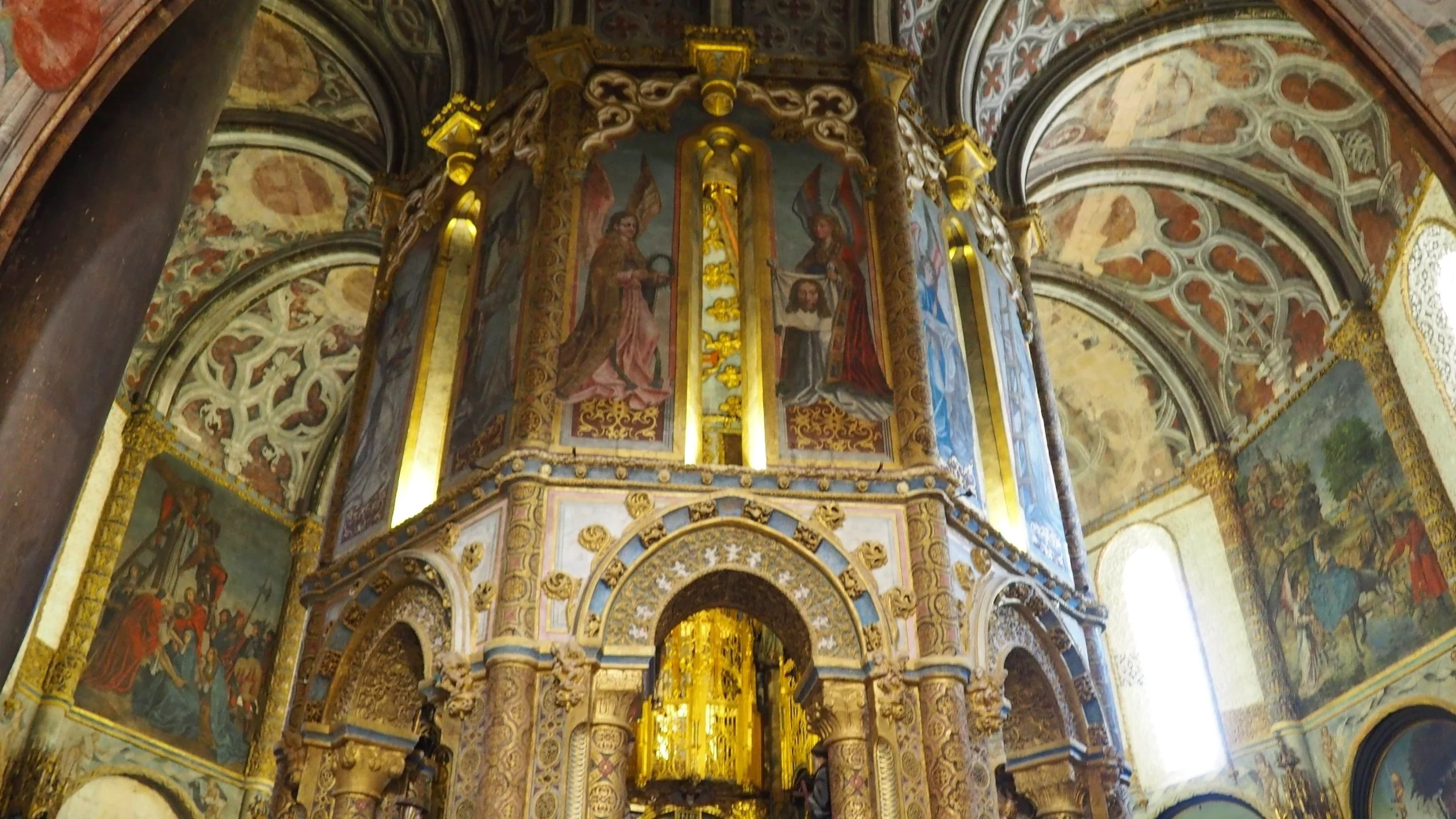
Today, the Convent of Christ is open to visitors who can explore its many fascinating features. Walking through the cloisters and chapels, visitors can admire the intricate stonework and beautiful decorative elements. The Charola is still used for worship, and its unique shape creates a serene atmosphere.

In addition to its Templar heritage, Tomar boasts charming streets, historic buildings, and picturesque scenery. Visitors can explore the winding alleys of the old town, visit the medieval castle, and admire the panoramic views from the hilltops.
The city also hosts cultural events, festivals, and exhibitions like Festa dos Tabuleiros - a religious and cultural festival, typically occurring every four years, where locals carry tall stacks of bread and flowers on their heads in a procession, and Festa Templária - which celebrates the history and heritage of the Knights Templar in Portugal, often featuring reenactments, parades, and historical exhibitions.
9. The Templar Knights
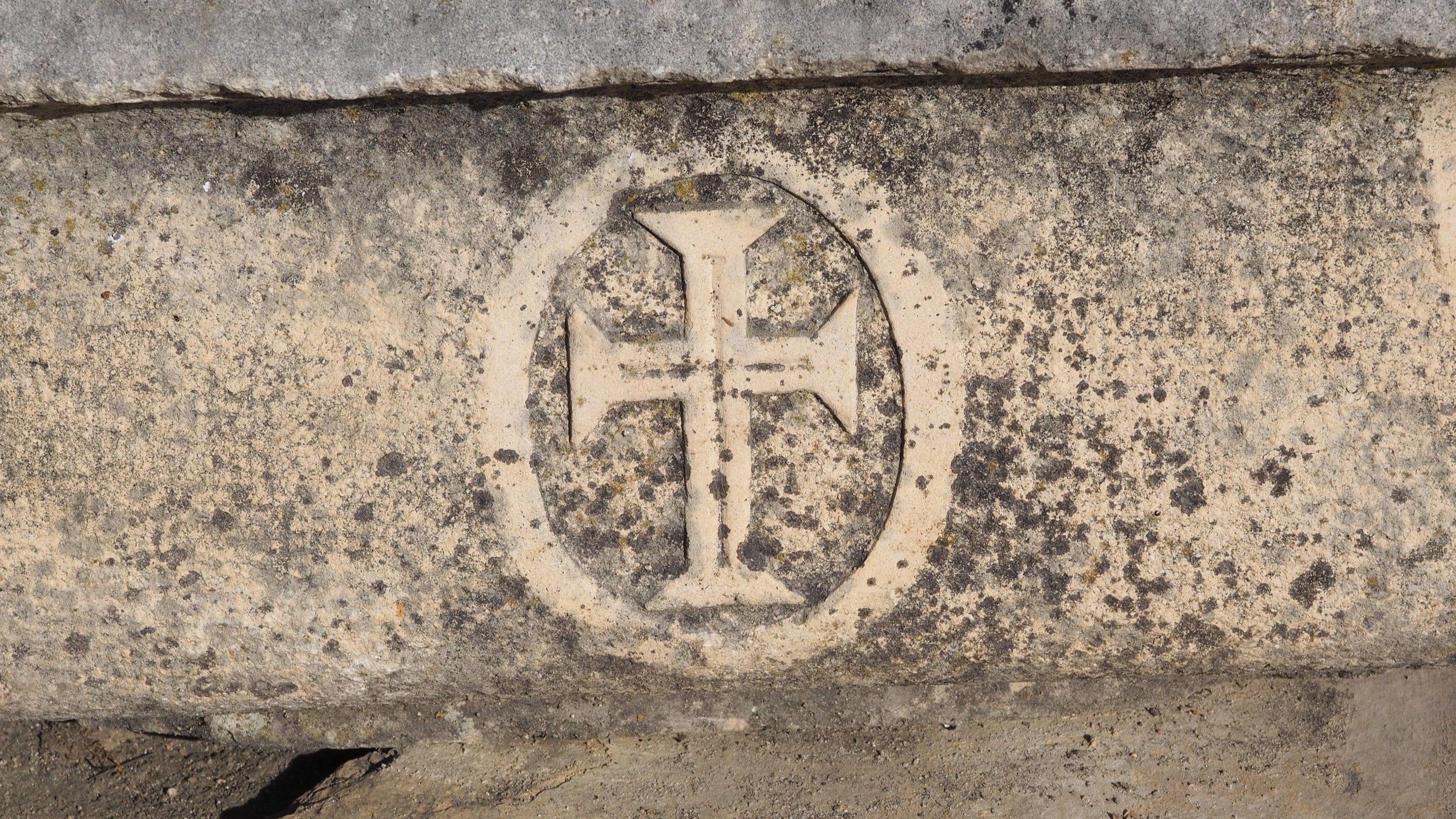
The Templar Knights, formally known as the Poor Fellow-Soldiers of Christ and of the Temple of Solomon, were a medieval Christian military order founded in the early 12th century. Their primary purpose was to protect Christian pilgrims traveling to the Holy Land during the Crusades.
Recognized by the Latin Church in 1129, they grew rapidly in wealth and influence, engaging in battles against Muslim forces and establishing a vast network of commanderies and commercial enterprises across Europe and the Middle East.
However, accusations of heresy led to their downfall in the early 14th century, with many members arrested, tortured, and executed. Despite their dissolution, the Templars left a lasting legacy, inspiring legends, conspiracy theories, and fictional portrayals.
How are they related?
The Order of Christ in Portugal has its origins in the Knights Templar. When the Templars were suppressed in the early 14th century, King Dinis of Portugal reestablished the order under a new name, the Order of Christ, in 1319. He did so partly to protect the Templars in Portugal from persecution, but also to benefit from their wealth and military expertise.
The Order of Christ continued many of the traditions and practices of the Templars, including their role in protecting Portugal's interests overseas, particularly during the Age of Exploration. The connection between the Templars and the Order of Christ is also reflected in their shared symbols and iconography.
How to get to the Convent of Christ
If you are planning on going by public transportation then you can take a regional train for 8€ or a bus for 10€ using Rede Expressos both taking around 1h40 to reach Tomar’s train station, then walk for 15 minutes up to the entrance of the medieval wall.
One of the most common ways to explore Portugal is to rent a car because it is not very expensive. Portugal one of the best roads in the world so it is easy to drive everywhere and will give you the possibility to explore other nearby places like Dornes or Grutas de Alvados. To reach Tomar it will take you about 1h30 from Lisbon or 2h from Porto by car.
If you're planning to fly to Lisbon or Porto, you can compare flight prices on our flights page to ensure you get the best deal.
Where to Eat near the Convent of Tomar
Afterward, consider venturing into the historic city of Tomar for a delightful lunch at Taverna Antiqua or Bela Vista. Following your meal, immerse yourself in the charm of this ancient city, strolling through its picturesque streets and discovering its rich history. Indulge in a leisurely afternoon break at a local pastry shop (known as a 'Pastelaria' in Portuguese), savoring delicious treats and soaking in the local ambiance.
Things To Do near the Convent of Tomar
Tomar served as a significant stronghold in Portugal, having deep connections to the Knights Templar, a medieval Christian military order renowned for their role in the Crusades and their influence across Europe during the Middle Ages.
The city was strategically located and played a pivotal role in the order's activities, including military campaigns, religious endeavors, and administrative functions. The Templars left an indelible mark on Tomar, shaping its architecture, culture, and identity.
Besides the most notable landmarks in Tomar, it’s also worth mentioning the Seven Hills National Forest - a beautiful garden near the convent walls or the Church Santa Maria do Olival - a primitive temple 1160 built by the provincial master of the Order of the Knights Templar in Portugal, Gualdim Pais.
You can also explore a little further the Aqueduct of the Convent of Christ - it was commissioned by Philip I, with the aim of supplying water to the Convent of Christ. The project for this aqueduct was designed in 1584 by the renowned Filipe Terzi, chief architect of the Kingdom, with construction work commencing only in the year 1593. you can reach this place walking through the Seven Hills National Forest (you can see this wikiloc trail).
Top tours in Tomar
Where to Stay near the Convent of Christ
As the day draws to a close, you have the option to return to Lisbon or extend your stay in Tomar to explore nearby attractions. If you have an extra day you might consider sleeping in Tomar and take a scenic train journey to Santarém, known as Portugal's Gothic capital, or venturing to the Almourol Templar's Castle nestled in the Tagus River, further enriching your journey with fascinating discoveries.
You can take a look on some accommodation options in Tomar:
Travel Tips for the Convent of Christ
Price: 10€ - You can buy the ticket avoiding lines in the ticket office: Buy ticket
Opening hours:
October to May: 09h00 to 17h30
June to September: 09h00 to 18h30
Closed: January 1st, March 1st, Easter Sunday, May 1st, December 24th and 25th
Disclosure: Some of the links in this post may be affiliate links. This means that if you click on the link and make a purchase, we may receive a small commission at no extra cost to you. This helps us continue to provide valuable content and recommendations for our readers. Thank you for your support!