
Mianshan Scenic Area Travel Guide
Venturing into the Heart of Shanxi Province
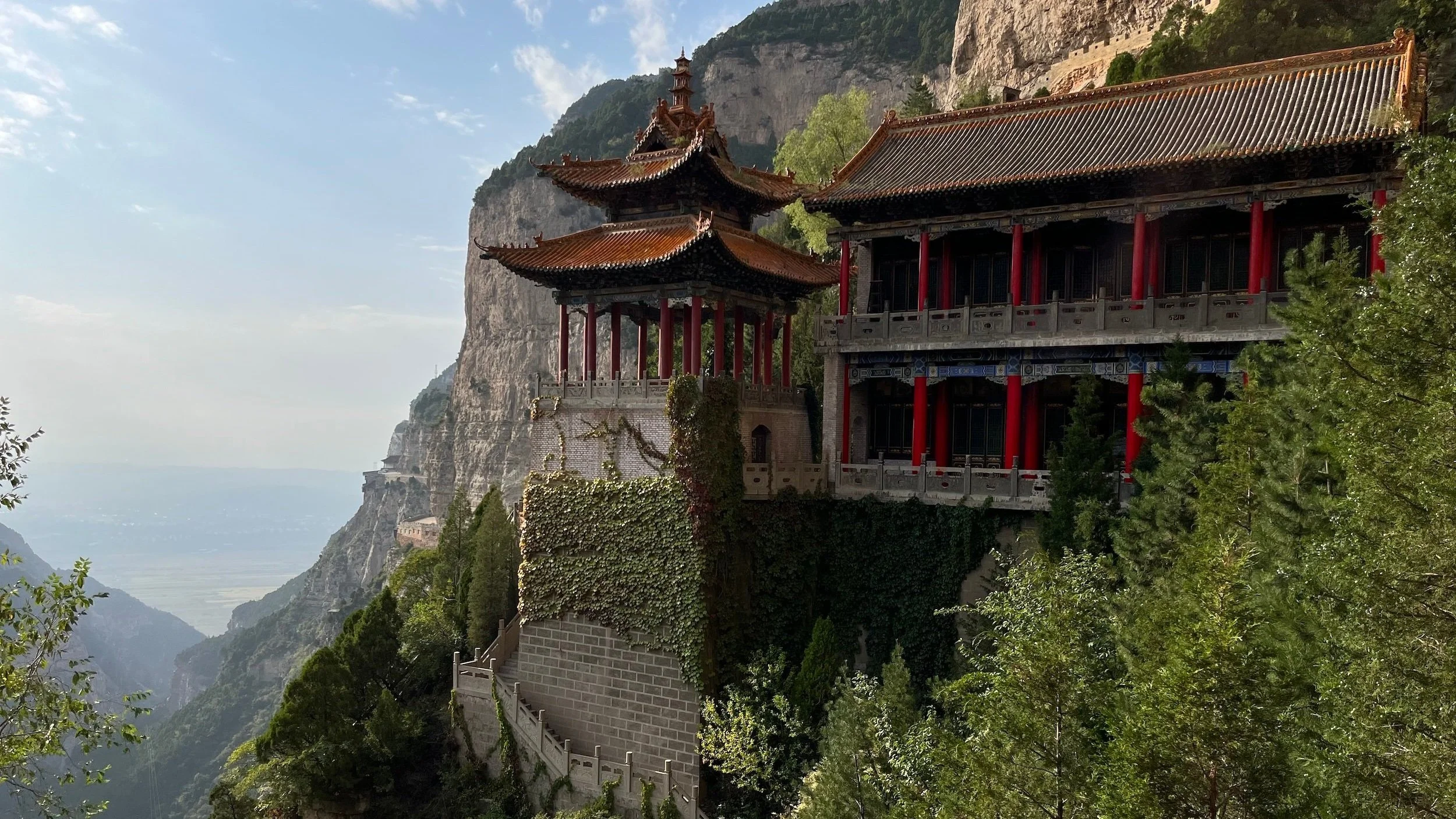
In the remote reaches of China's Shanxi province, lies Mianshan (also known as Mount Mian, Mian Shan or Mianshan Scenic Area), a Chinese national 5-A level scenic spot, making Mianshan one of the most famous landmarks in China. With ancient Taoist temples cling to the rugged cliffsides, tombs, mummified monks, tales and myths, Mianshan (Mount Mian) deserves to be part of China top landmarks list.
What to see in Mianshan
1. Dragon Head Temple (Lóngtóu Sì; 龙头寺)
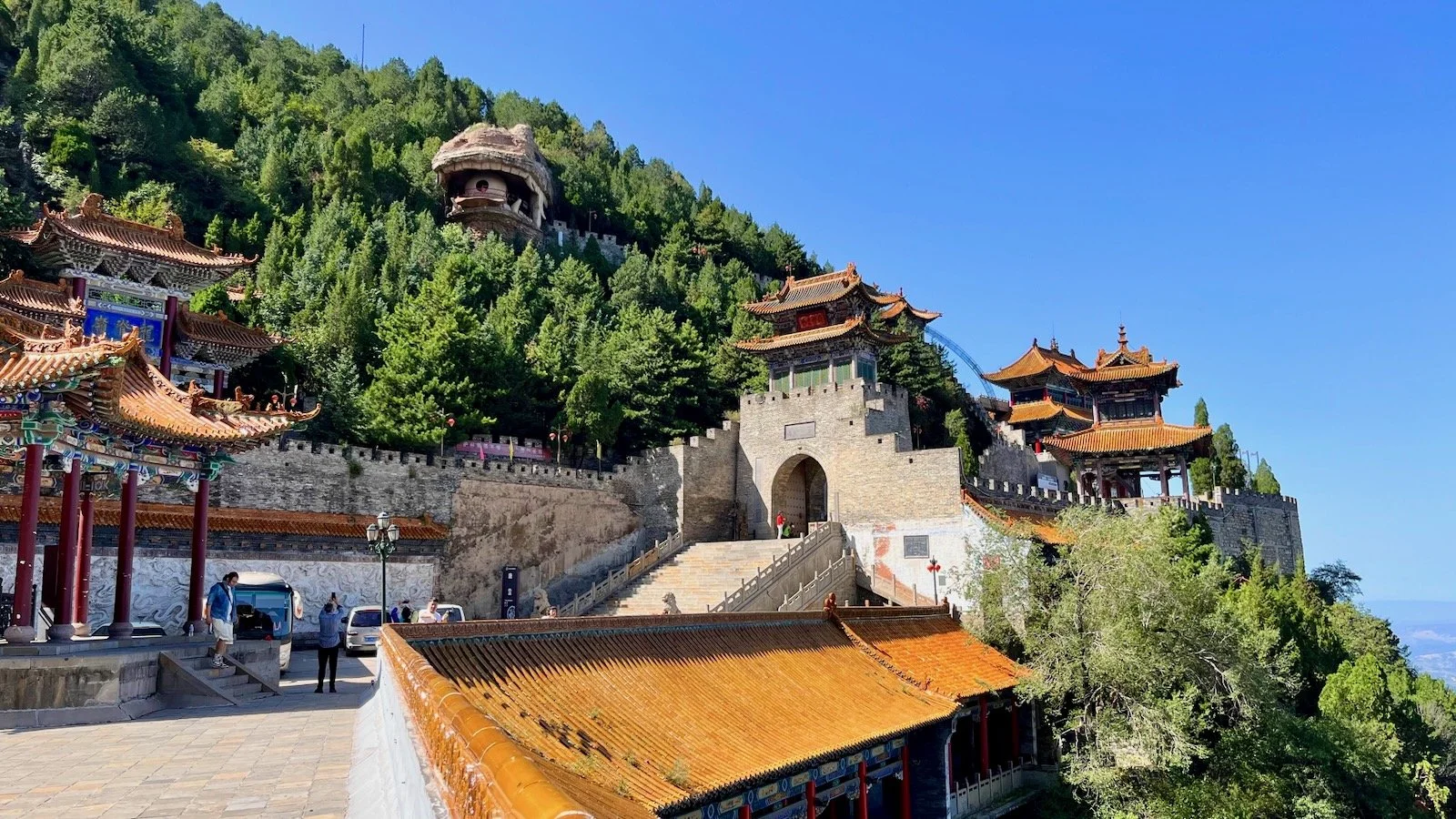
The Dragon Head Temple is the first temple you will see when entering Mount Mian at the first bus stop. We recommend a short stop to explore this scenic place and get some souvenirs and snacks from the shops in the area before you venture deeper into the Mianshan Scenic Area. The bus passes by every 10/15 minutes, so you can just hop off, explore any of the temples scattered across the mountain, and hop on the next bus. The map on Travel tips highlights all the main areas in the mountain and respective bus stops.
2. Qixian Valley (Qíxiān Xiá; 齐仙峡)
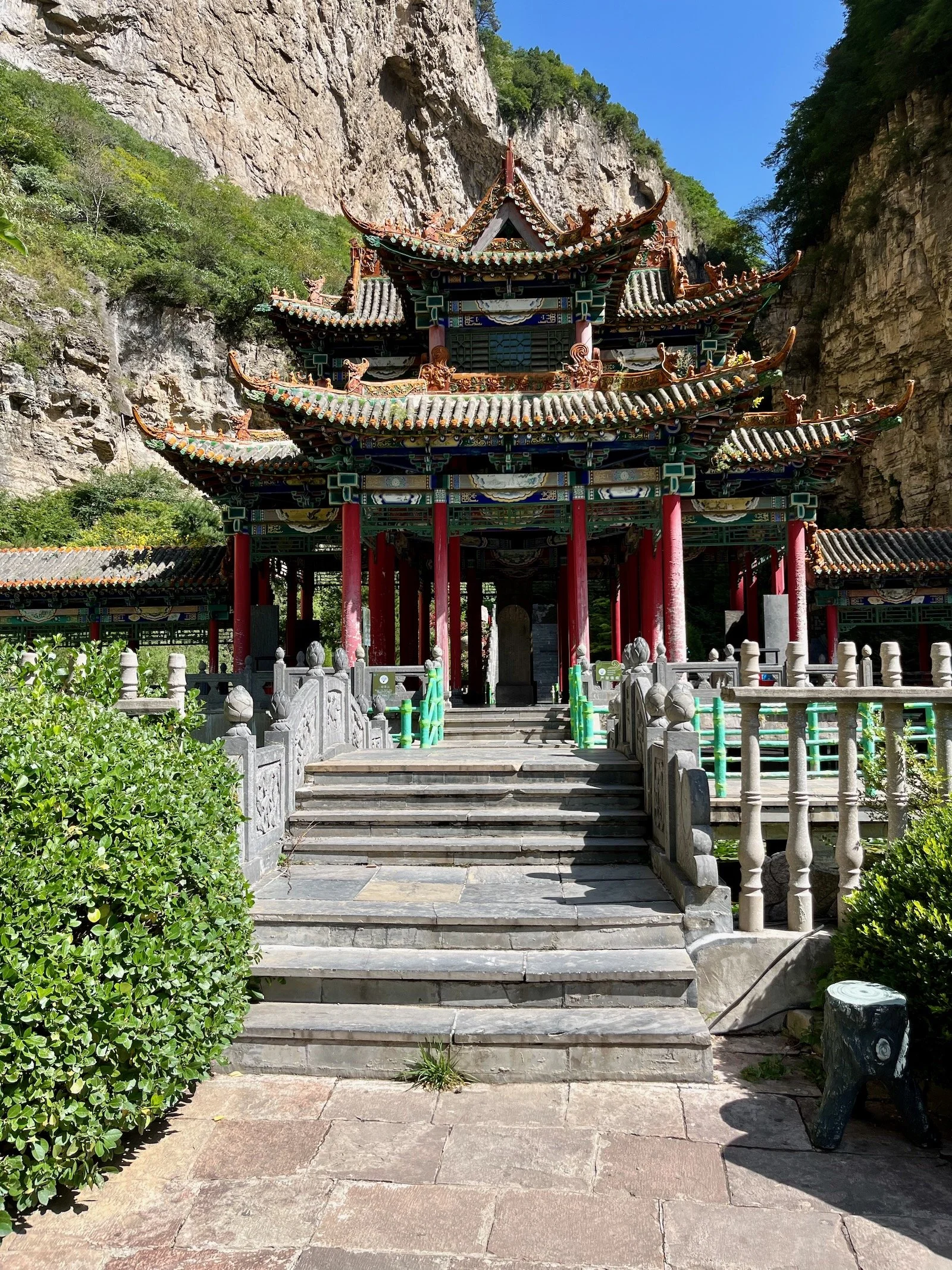
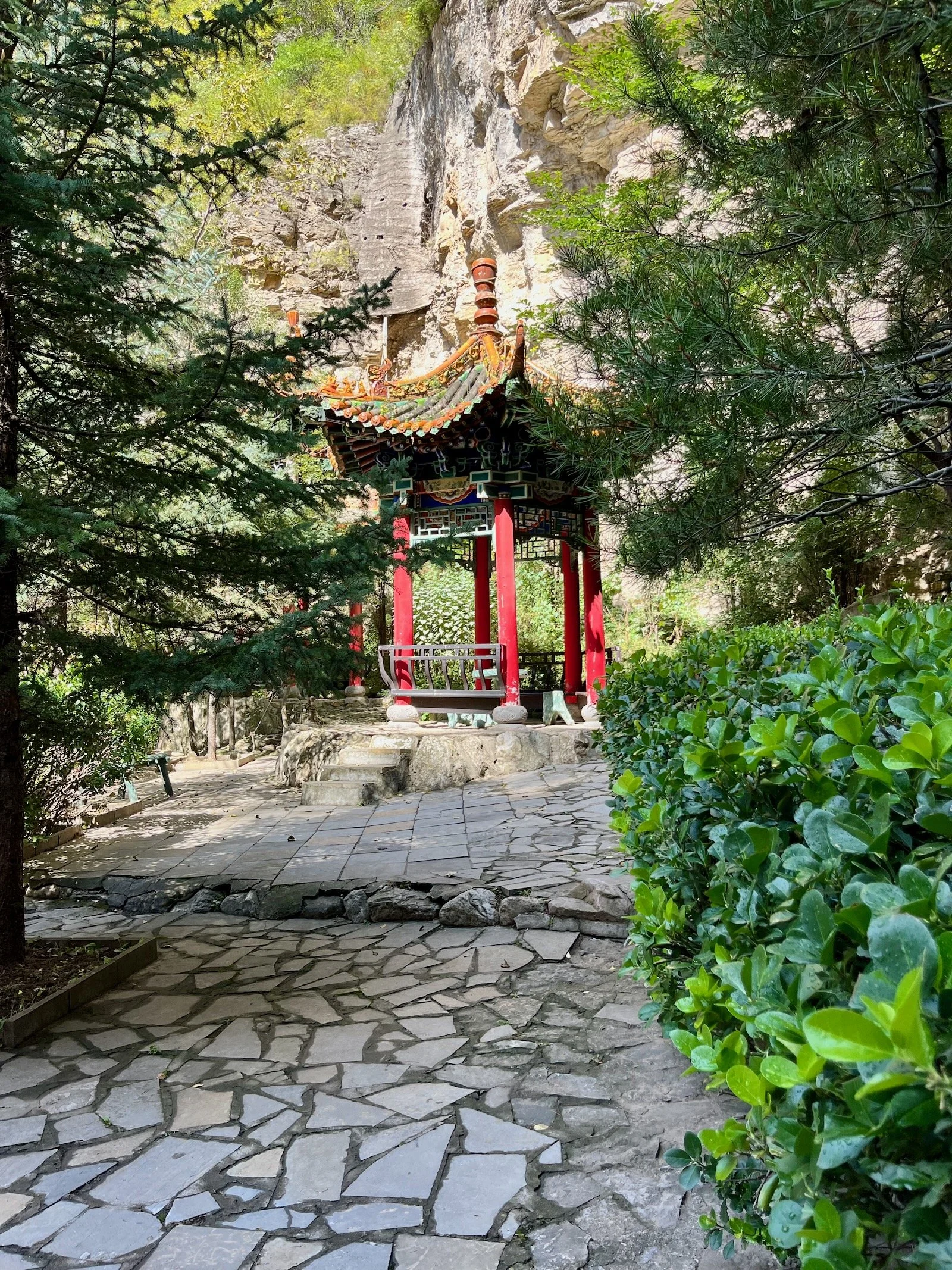
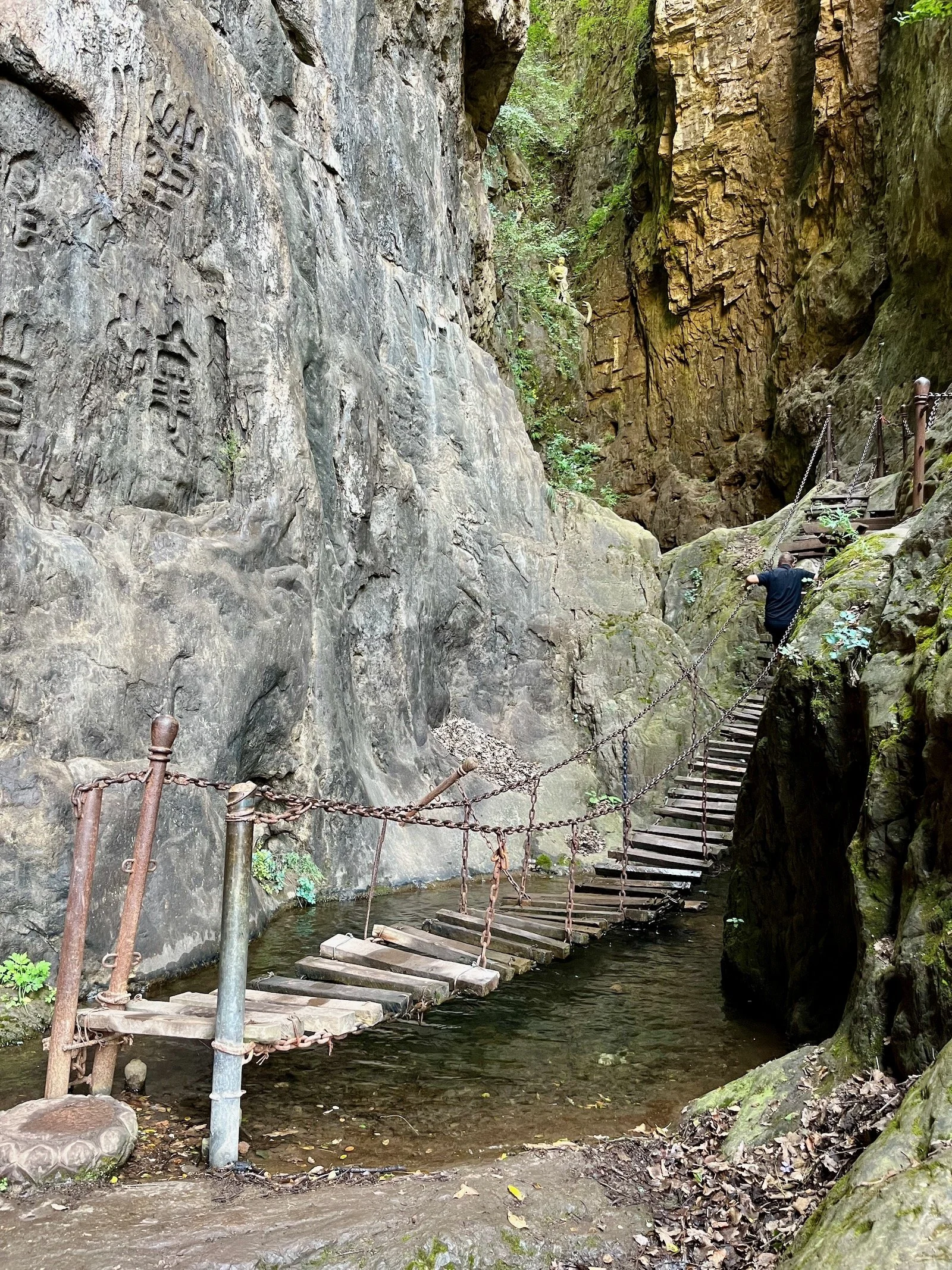
We recommend hopping off the bus on the second Qixian Valley bus station and do the trail up to the top of the mountain avoiding the morning crowds in the most famous places like the Sky Plank Road and Sky Bridge, which are best to explore in the afternoon when most group tours have left.
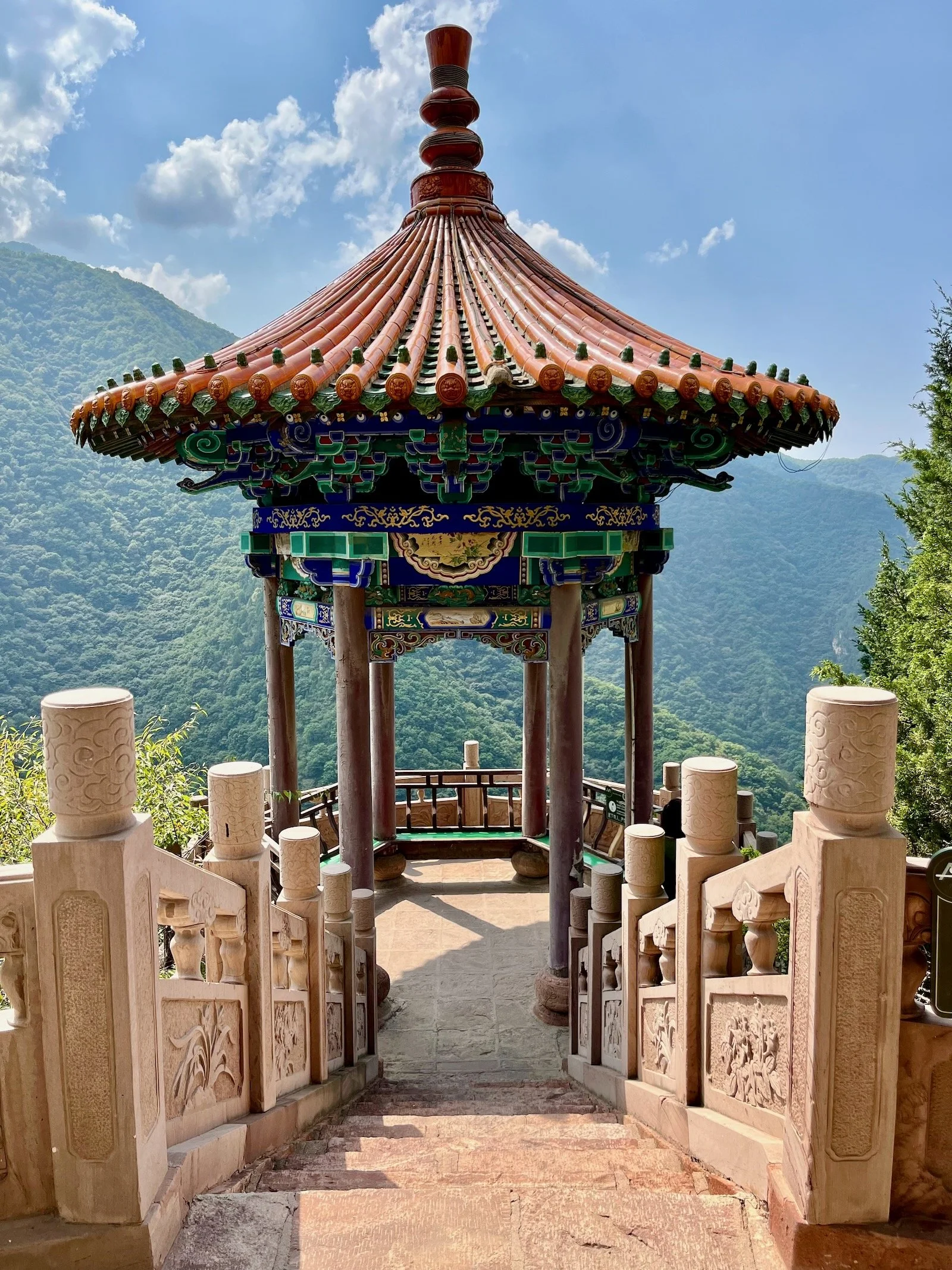
The Qixian Valley is one of the most beautiful and calmer places in Mianshan, with an excellent integration of Taoist temples in nature. It’s a challenging but short trail, perfect for those who enjoy a small shot of adrenaline, and you will be rewarded with breathtaking views of the mountains and beautiful temples empty.
The trail generally offers two different paths either in wood or metal plank scattered on the side of mountain cliffs and spotted with countless little bridges suspended above rapids and waterfalls. Even though it may look daring at times, the paths are both well-maintained so you can choose the one you feel more comfortable with.


This interesting trail above the river is filled with history narrated in Chinese inscriptions on the cliffs that tell the tale of Jie Zitui's pilgrimage to Mount Mian and the multiple obstacles he faced. The most challenging section of the trail eventually ends in a very calm and tranquil location with small ponds and the statues of an elephant, a sheep and a man referring to an ancient Chinese tale.
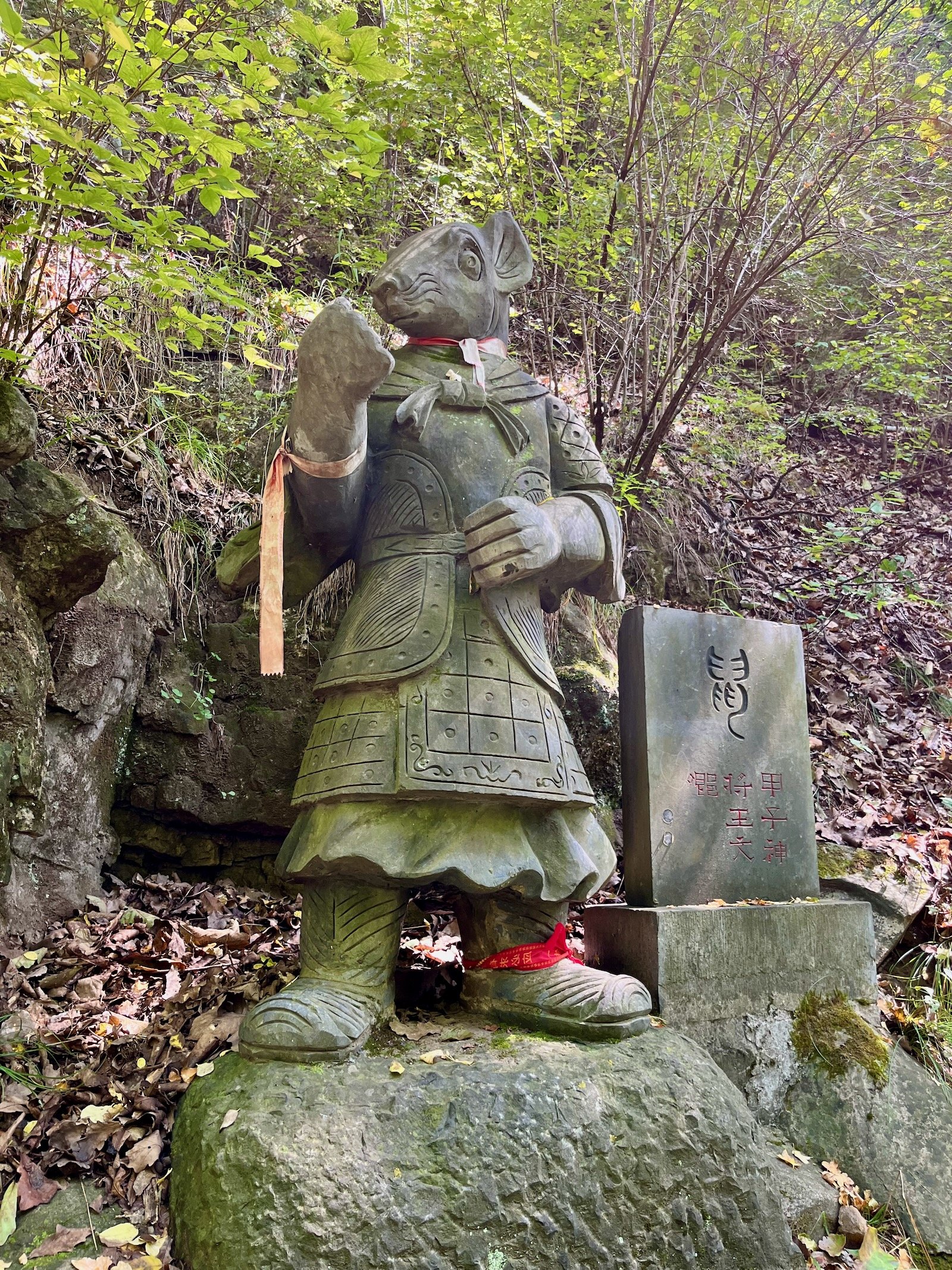

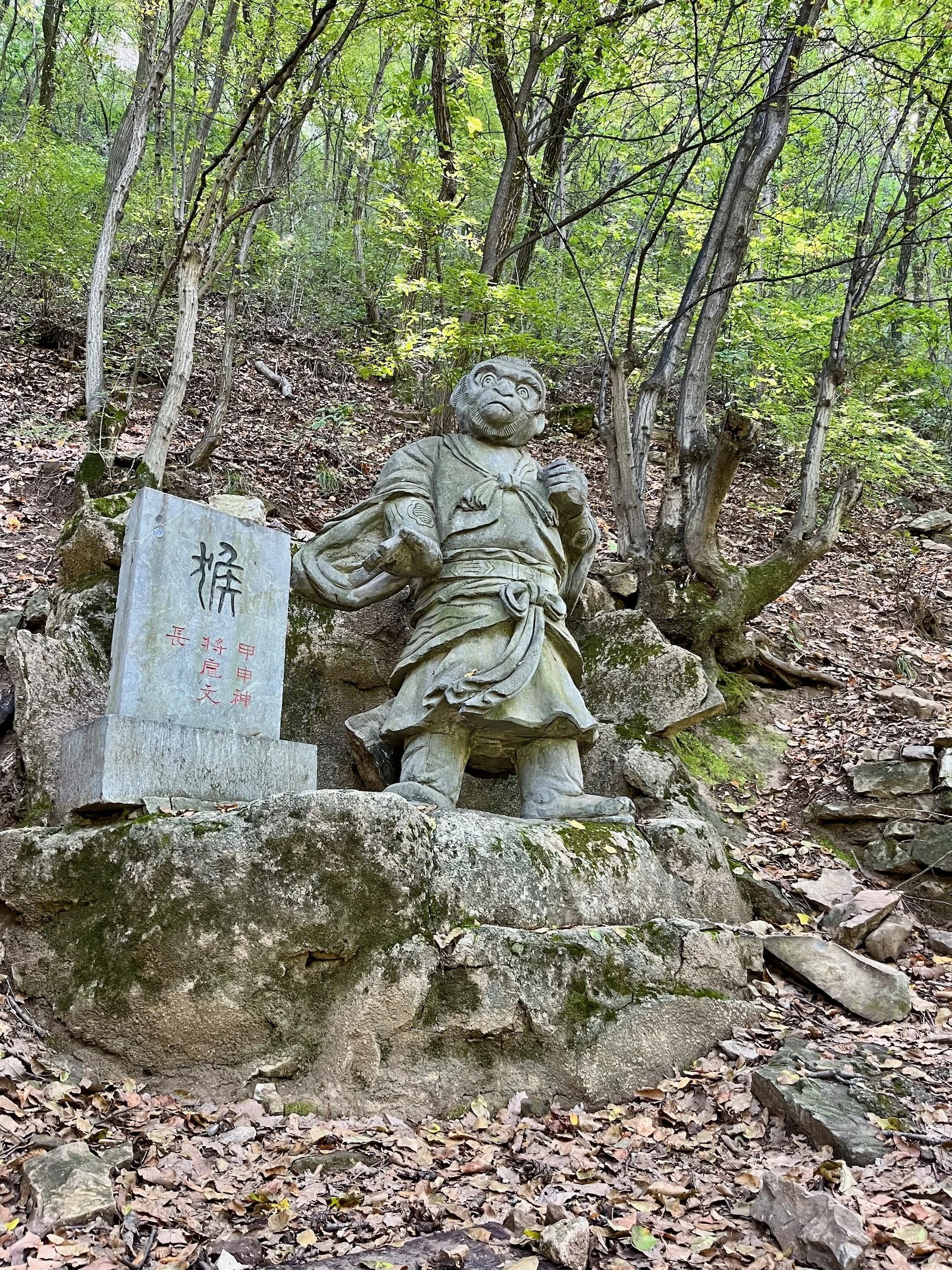
The trail then continues up the mountain being flanked by statues representing all of the Chinese Zodiac animals. Soon after passing them, you will arrive at a breathtaking place, where you can take your time to enjoy the scenic view, the marvellous natural sounds of the mountain’s fauna and flora, and rest for a while. It’s the perfect place to eat some snacks before continuing your journey.

3. Lord Jie Tomb (Jiè Gōng Mù; 介公墓)
If you choose to visit Lord Jie Tomb you need to go up the stairs at this point. Soon you will arrive at a very nice viewpoint which offers a breathtaking wide overview of Mianshan.
This is the perfect place to relax and enjoy the serene beauty of Mianshan. It’s possible to discover the temples that are scattered across the mountains in a silent and peaceful way. Continue heading up the find Lord Jie final resting place.

Jie Zhitui's legend, originating in the 3rd century BC, depicts his selflessness and loyalty towards his lord, Chong'er. Jie Zhitui, also known as Jie Zitui, was an esteemed aristocrat who served Prince Chong'er during the Spring and Autumn Period of Chinese history.
Despite his unwavering loyalty and sacrifices during times of hardship, Jie was either overlooked or refused any reward when Chong'er ascended to power as the duke of Jin, known as Duke Wen.
Feeling unappreciated, Jie retired to the forests of Jin with his mother and refused to leave. Legend has it that Duke Wen, ordered a forest fire to compel him out of hiding. Tragically, Jie and his mother perished burned to death during a forest fire.
Over time, Jie came to be revered as a Taoist immortal in central Shanxi, commemorated annually with rituals that eventually evolved into China's Cold Food. You can get more details about Jie Zhitui's tragic story in this Wikipedia article.
After exploring the tomb, if you continue the path to the top of the mountain you will get Lord Jie Temple. Since we had only one day to explore the mountain, we decided to save some time by coming back downstairs and continuing through the stone road on the left to Lord Jie Temple.
4. Lord Jie Temple (Jiè Gōng Miào; 介公庙)
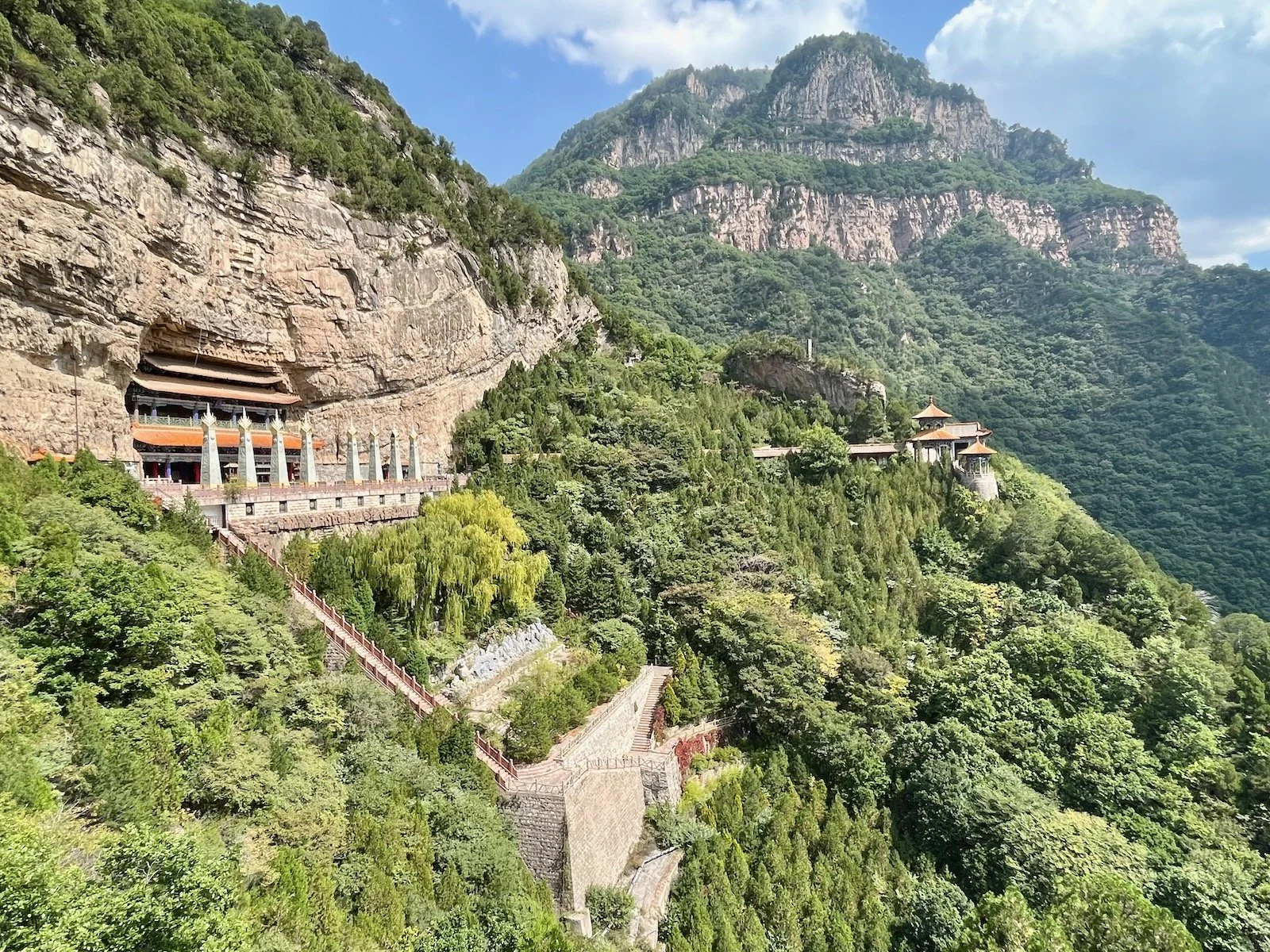


The Lord Jie Temple holds significant cultural and historical importance. Dedicated to Lord Jie, a revered figure in Chinese folklore, the temple serves as a place of worship and reflection. The temple is carved inside the mountain and adorned with 8 columns with inscriptions and detailed carvings.

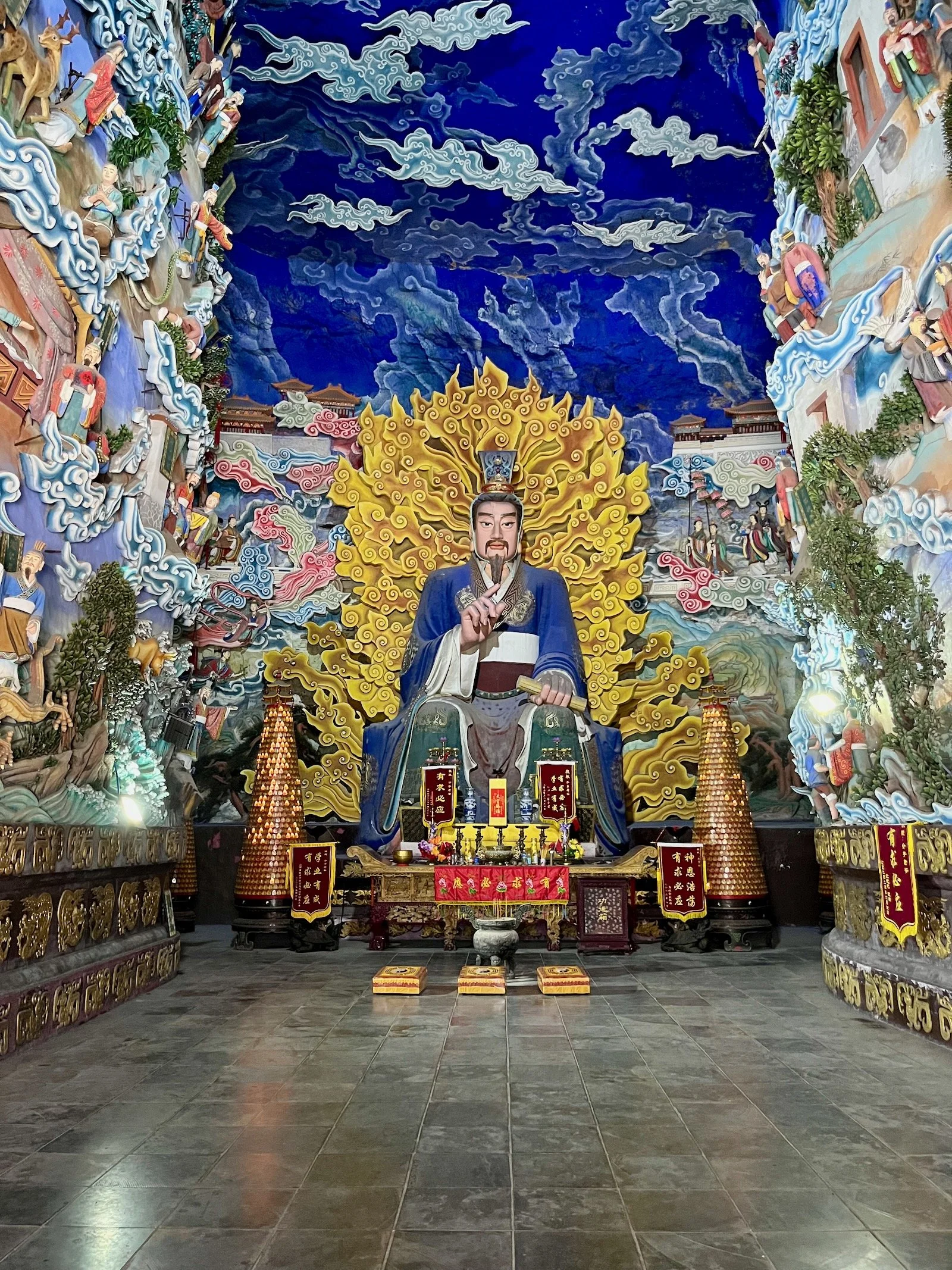
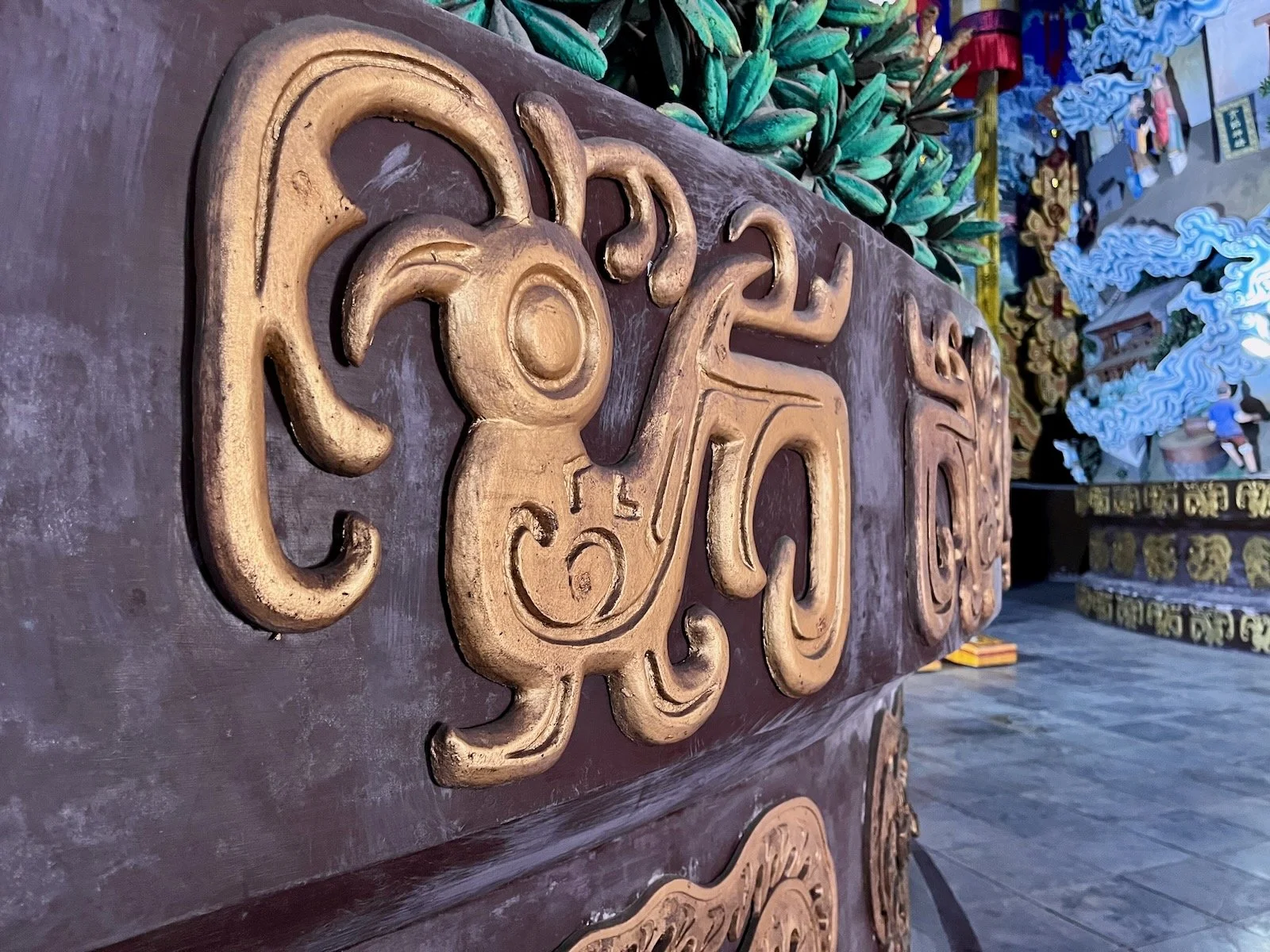
When entering the Lord Jie Temple, you will be amazed by a highly decorated room, full of Taoist figures and paintings. The colourful carvings on the wall inside the temple depict scenes of the life of the almost mystical figure of Jie Zhitui and the numerous legends that emerged about him. The tridimensionality of the figures and the brightness of the colours bring these amazing stories to life in, what for us, was the most impressive temple of the Mianshan region.
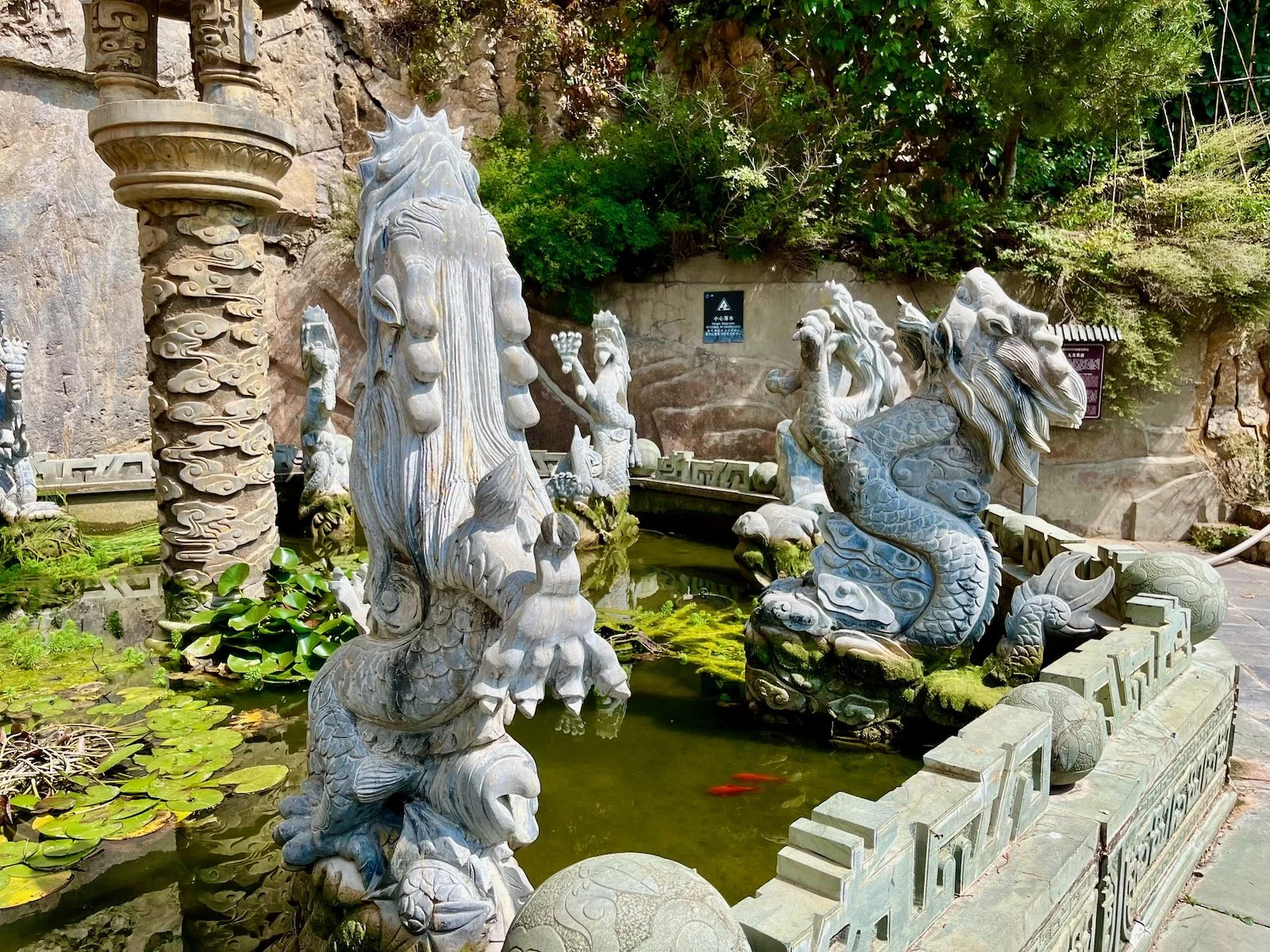
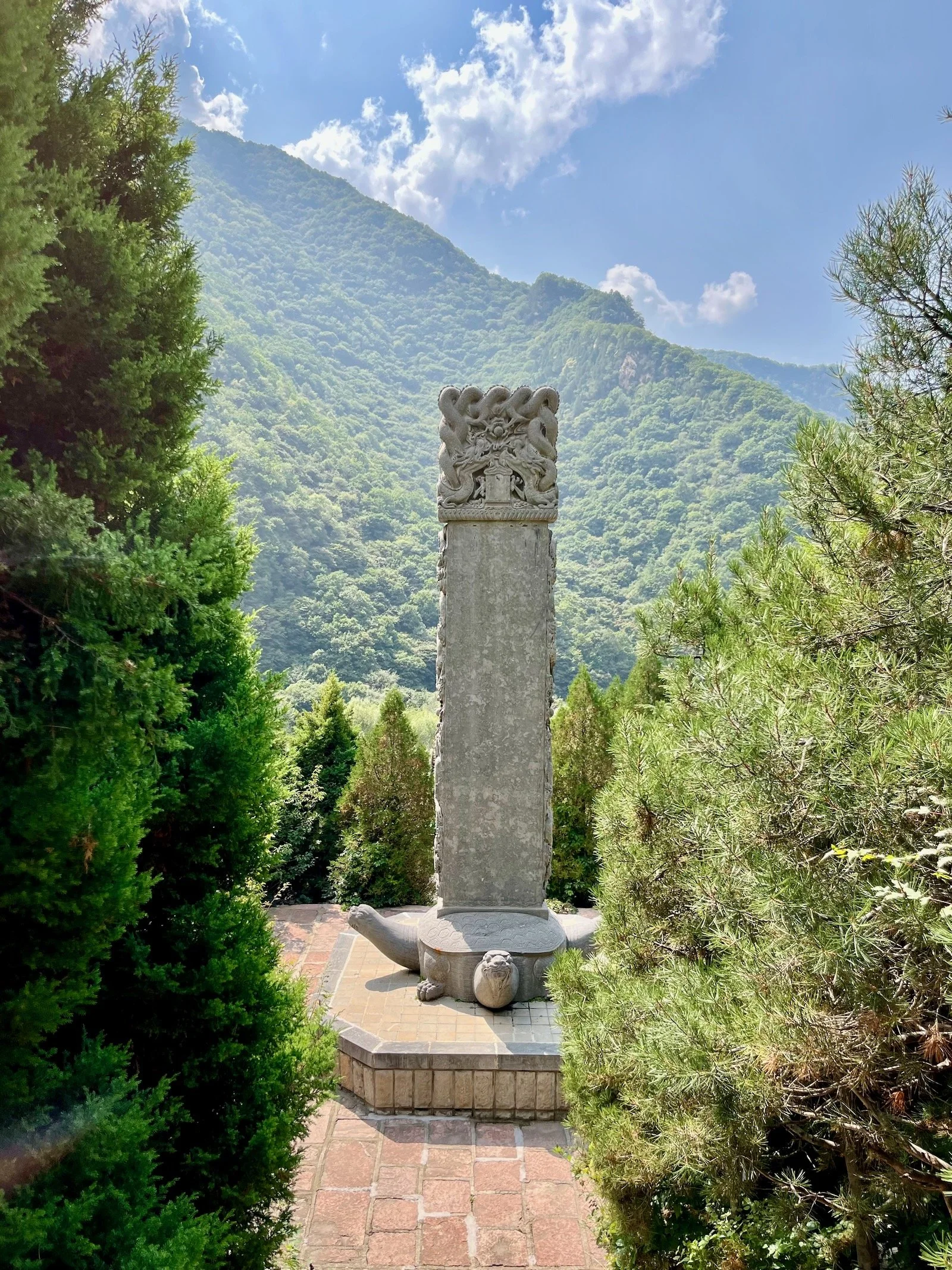
When strolling around in Lord Jie Temple many other interesting features gave us the feeling that we had just entered the world of Akira Toriyama’s masterpiece - Dragon Ball. Clear examples were the Dragons’ statues fountain, which depicts the dragons attempting to catch the crystal bright yellow ball or the four head turtles reminding us of Master Roshi (Kame Sennin in Japan).
Going down to the Shuitaogou point of interest. Here you can choose wether to do the Five Dragon Waterfall path or do as we did and hop on the bus to your next destination. We choose to not go to the Five Dragon scenic area do to lack of time and hop off on the first Qixian Valley bus stop (in the direction of Mianshan entrance).
5. Zhengguo Temple (Zhèngguǒ Sì; 正果寺)


When arriving at the bus stop, visitors are faced with a challenging ascent up the cliff to reach Mianshan Zhengguo Temple. To conserve time and energy, consider the convenience of the elevator, which provides a pleasant head start for 15 CNY. This temple is beautifully adorned with vibrant green and golden accents, featuring intricate dragon motifs. But, what truly distinguishes this site is the fact it houses the largest collection of Buddhist mummies in China.
This temple was recently made more known due to its appearance in the video game, Black Myth: Wukong.
6. Zhengguo Buddha Mummies
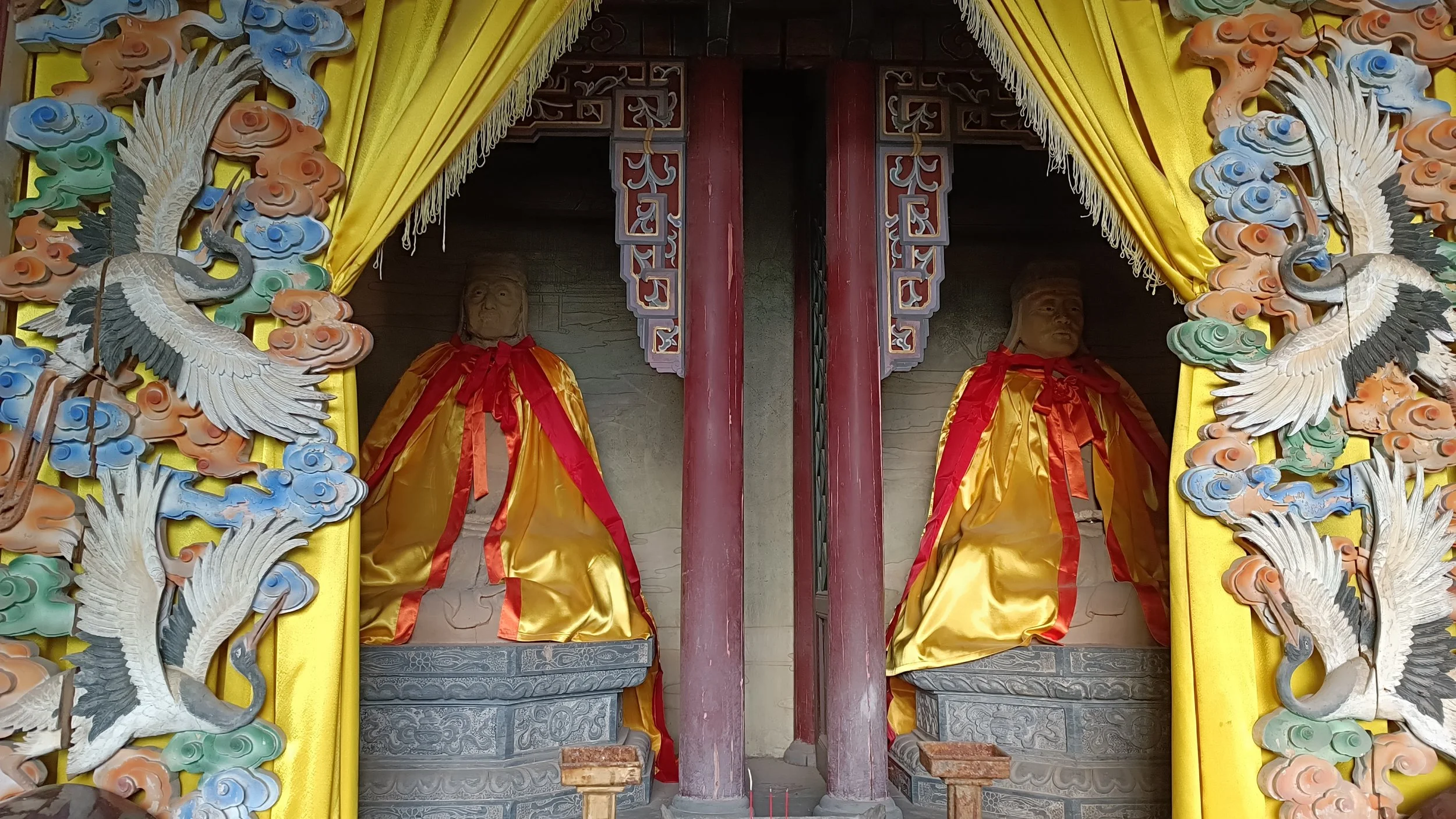
Within the temple grounds, there are twelve remarkable mummies of revered monks and sages from various dynasties. Those are Buddhist monks who devoted their lives to meditation, gradually letting go of earthly activities like eating, drinking, and even breathing in pursuit of transcendence. Over centuries have passed, yet their preserved bodies in meditation pose are still shrouded by clay statues mirroring their earthly forms. These statues evoke a sense of humility, serving as a poignant reminder of the enduring power of faith embedded within Buddhist traditions.
7. Zhengguo Pagoda (Zhèngguǒ Tǎ; 正果塔)
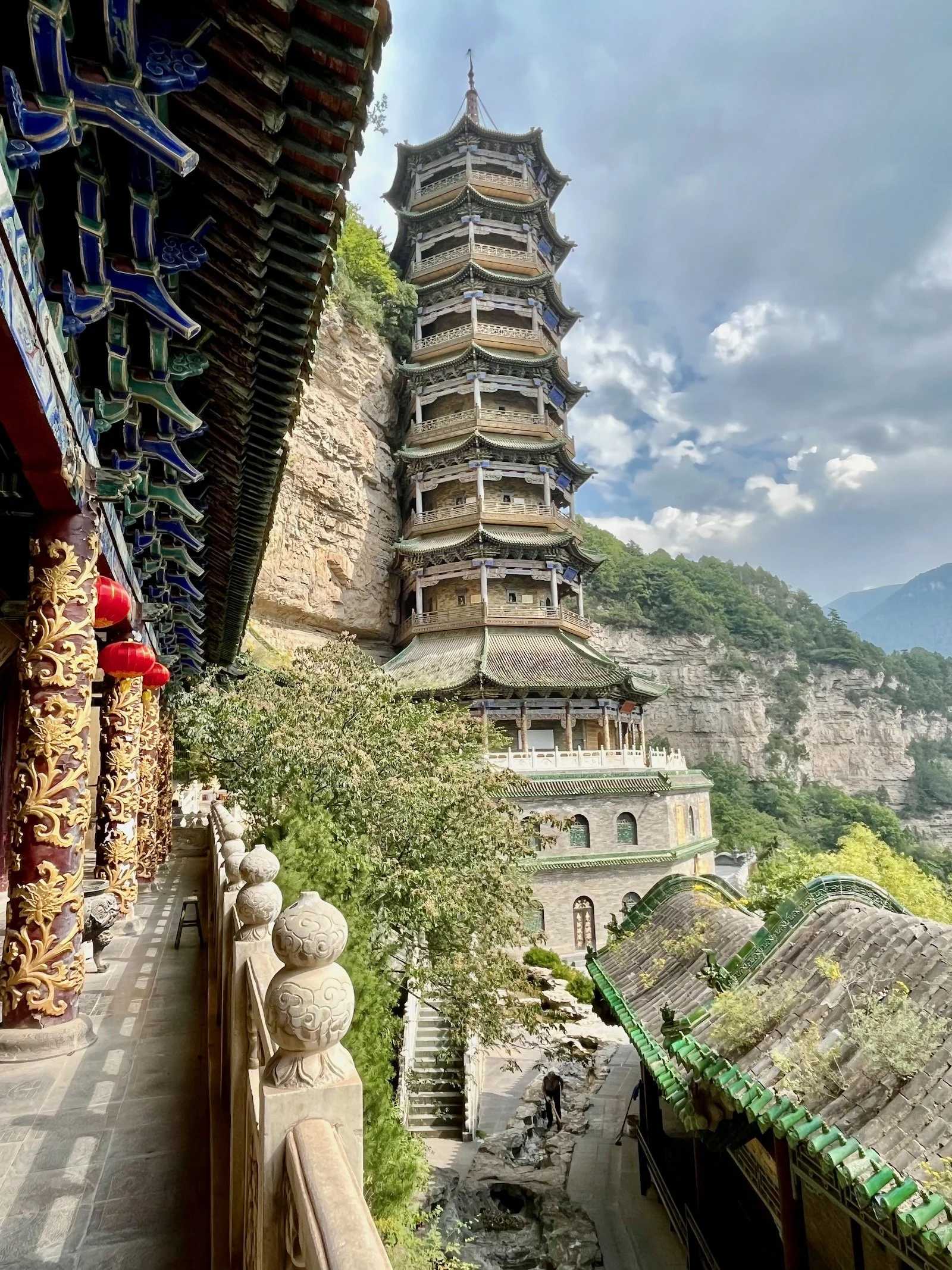
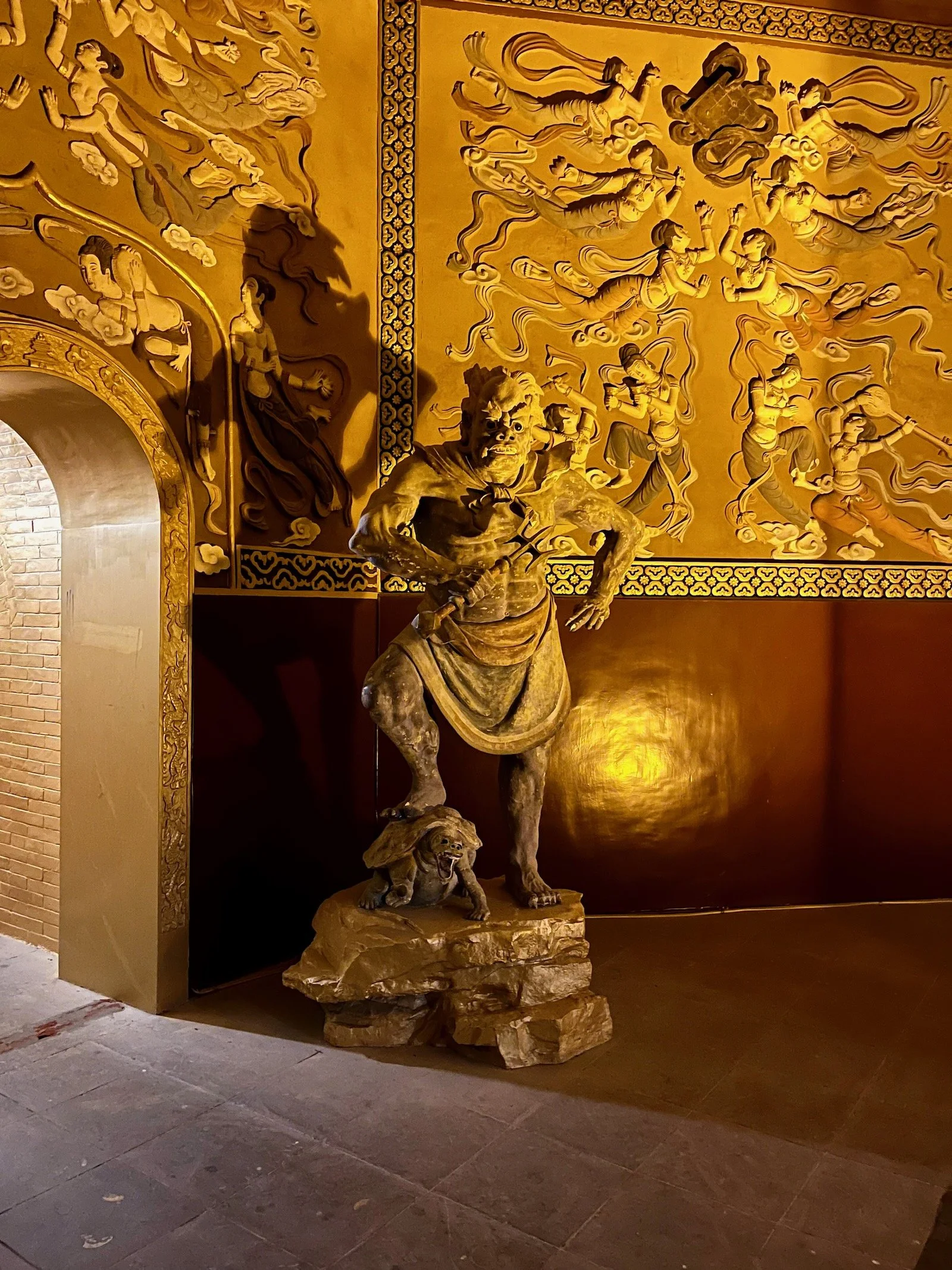
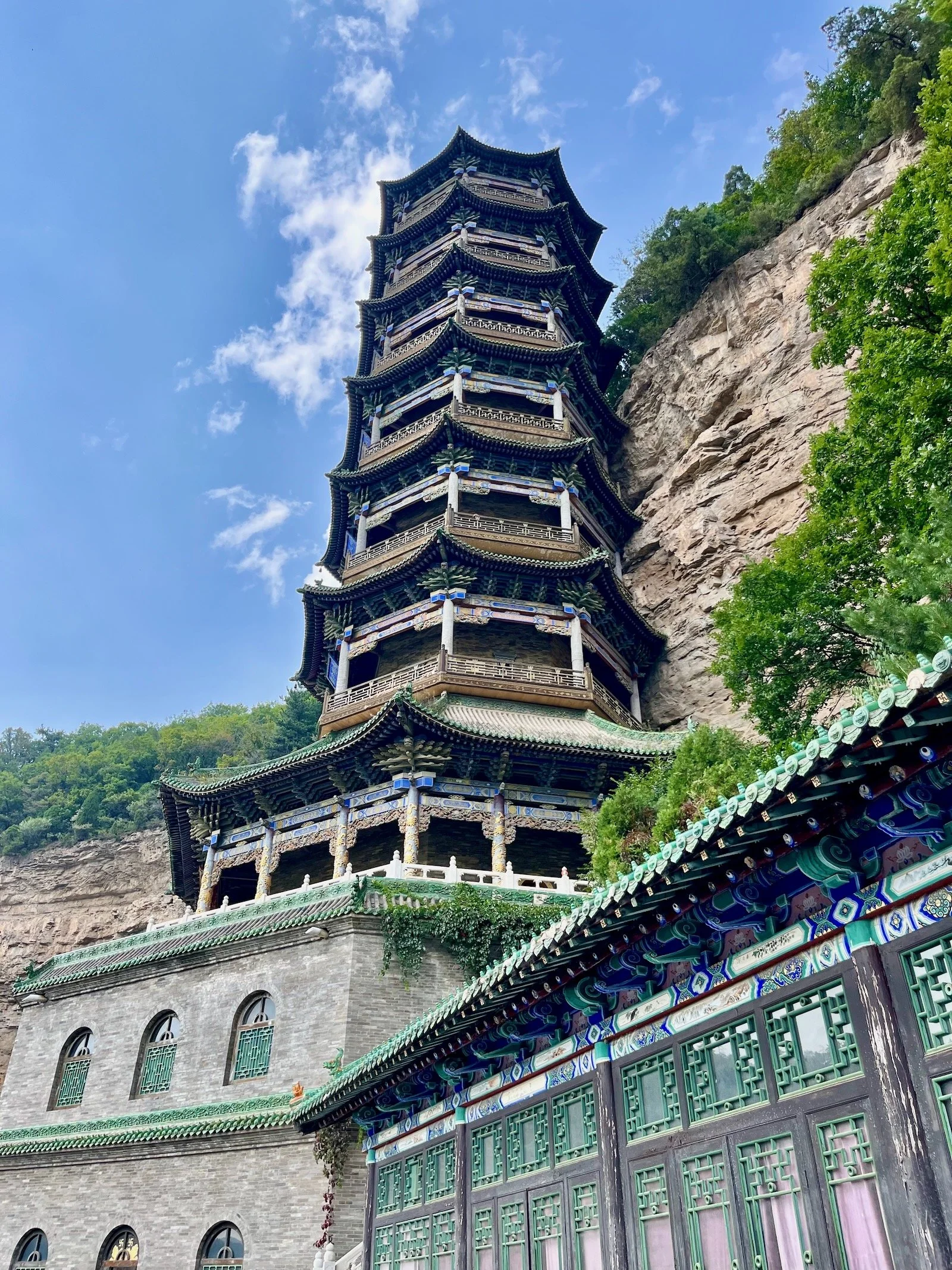
Adjacent to the temple, stands the magnificent Zhengguo Pagoda, a seven-storey richly decorated pagoda which promises visitors a breathtaking view of Mianshan from its pinnacle. All floors are accessible via narrow spiral stairs and each of them is very differently decorated, although all are adorned with stone statues representing various divinities. The walls are elegantly carved and embellished with vibrant colours, adding to the pagoda's allure.
Continue along the stone trail to the left at the summit of the mountain to access the peak of the Sky Plank Road in approximately 20 minutes.
8. Sky Plank Road (Tiānkōng Zhàndào; 天空栈道)
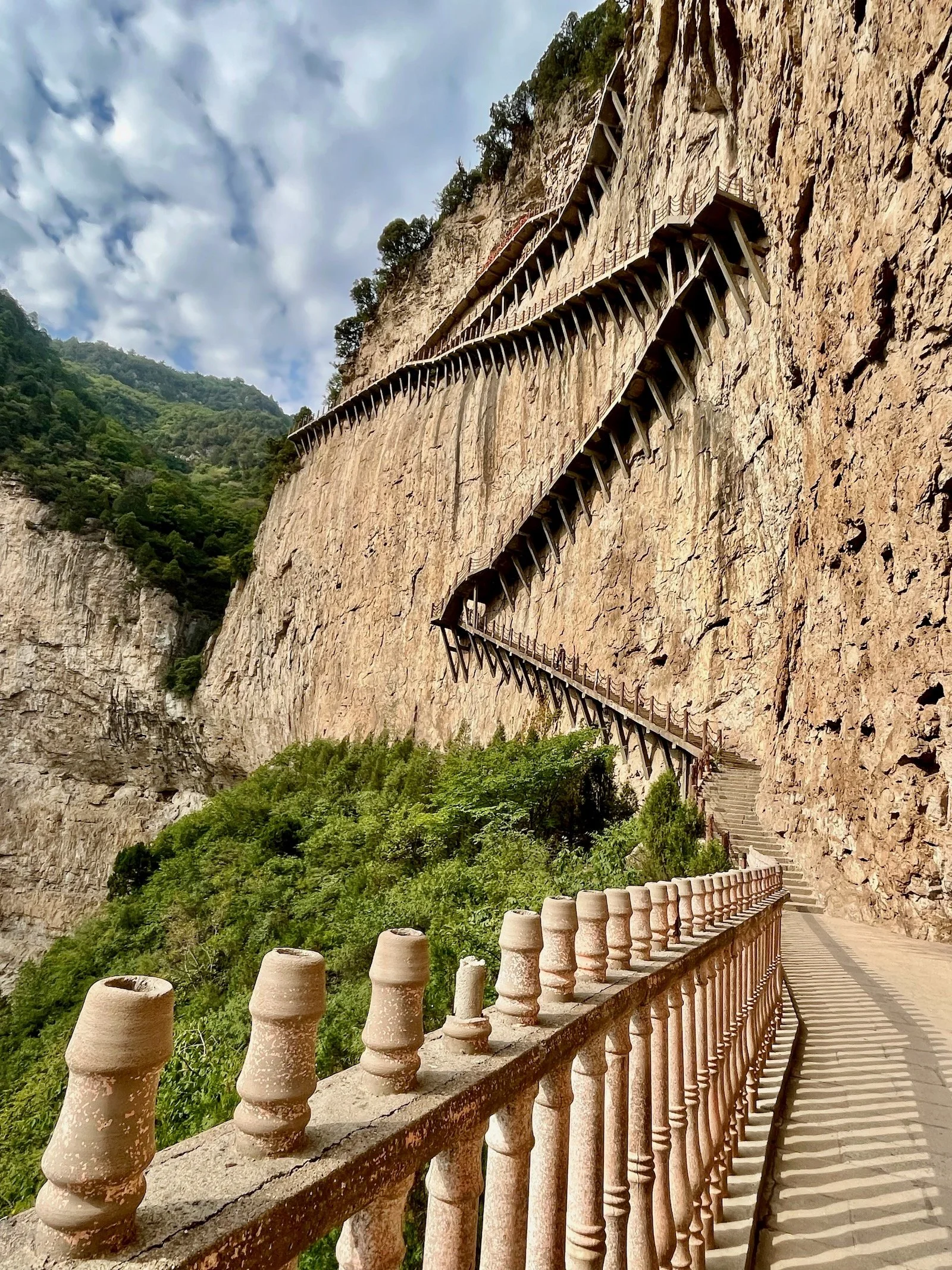
Upon reaching Sky Plank Road we were happy for our decision to use the elevator up to the Pagoda, avoiding climbing all the stairs of Sky Plank Road! This way we could enjoy the view from the Sky Plank Road at ease.
This elevated pathway winds its way along the sheer cliffs of Mianshan Mountain, providing stunning views of the surrounding landscape.
As you walk down this narrow walkway, suspended high above the ground, you might feel like walking on air, with nothing but the expanse of the valley below you.
The wooden planks creak beneath your feet, adding to the sense of adventure as you make your way through this dizzying path. The jagged cliffs, lush forests, and distant peaks create a stunning backdrop that will leave you speechless.
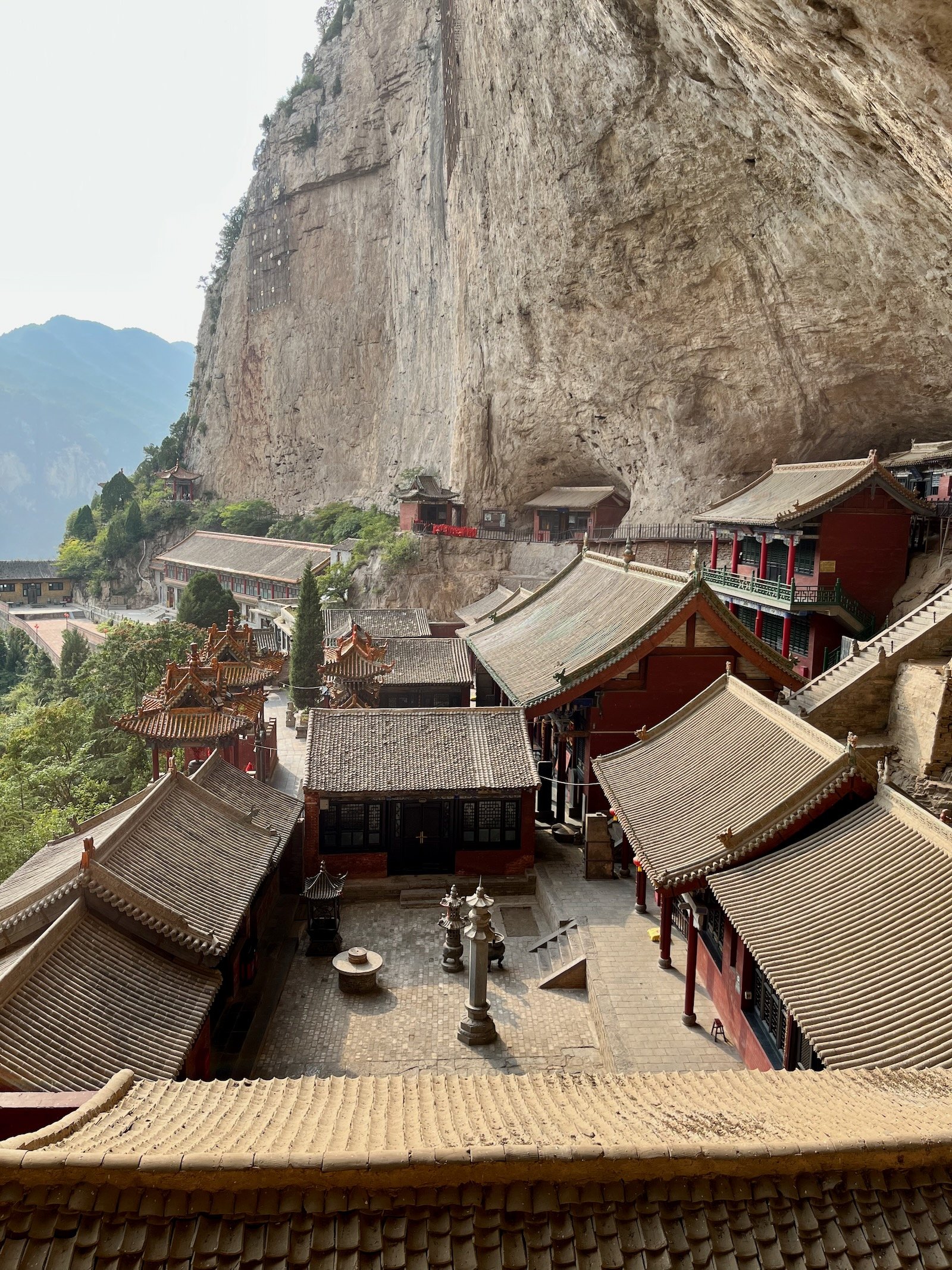
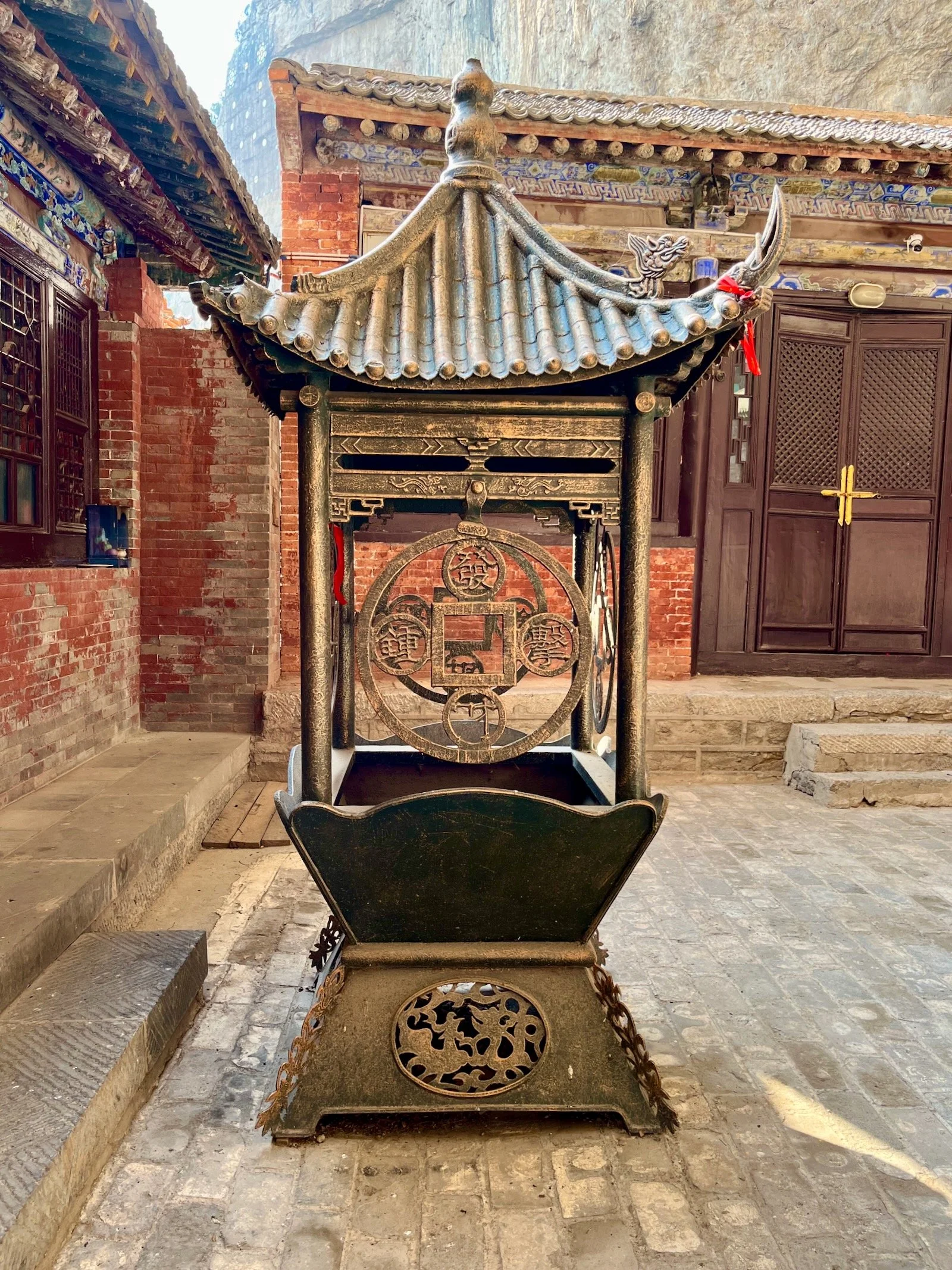

At the bottom of the stairs lies Yunfeng Temple. Then Yuenfeng Temples is a renowned Buddhist cave temple standing on the Baofu rock. Baofu in Chinese translates to "holding the belly." and the rock derived its name from its resemblance to this posture of holding 200 palaces within its belly. Hanging at the mountain walls above the temple there are numerous bells, enabling people to pursue blessings in a traditional way.
10. Zhujia Hollow (Zhūjiāwā; 朱家洼)
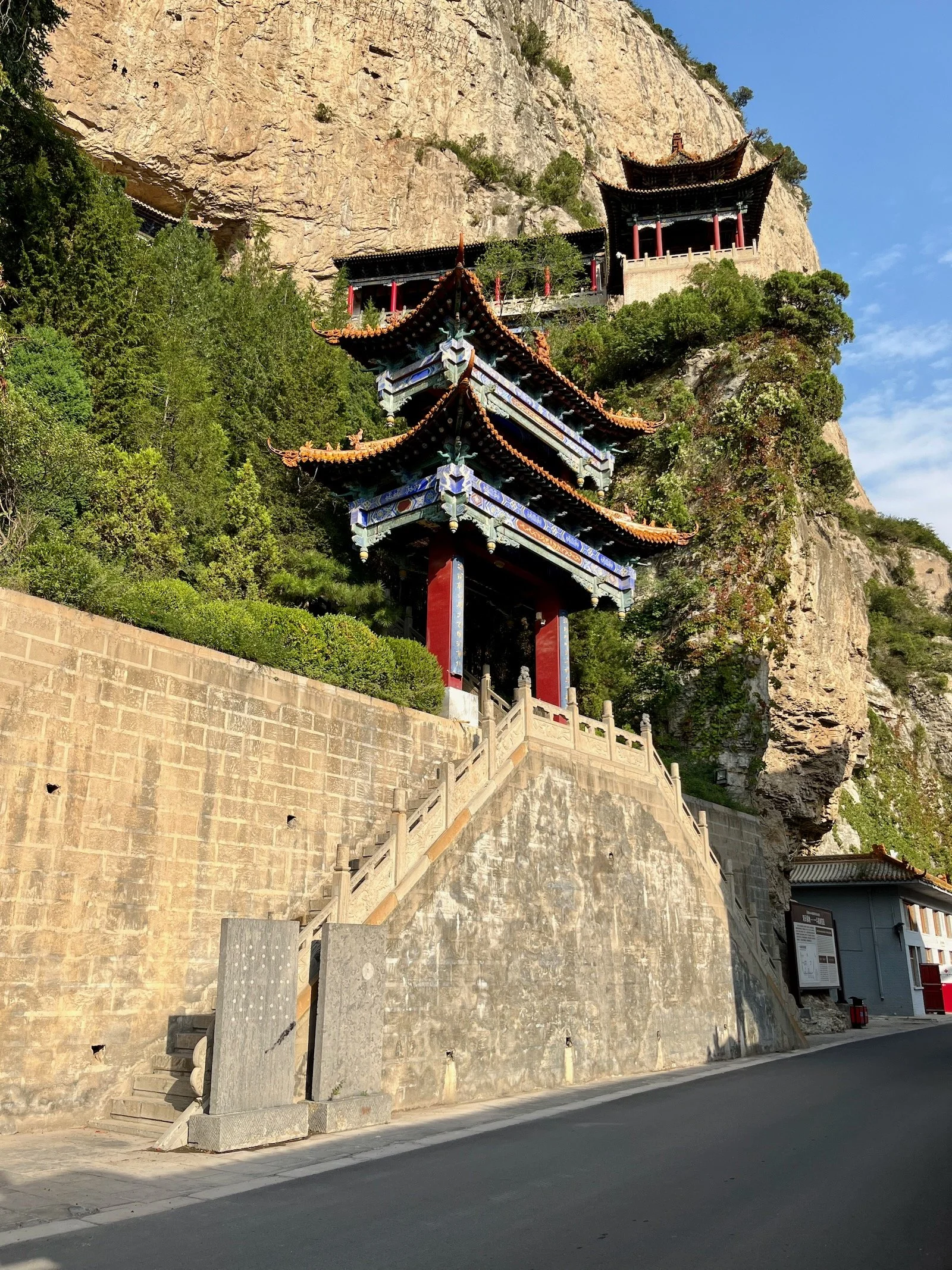
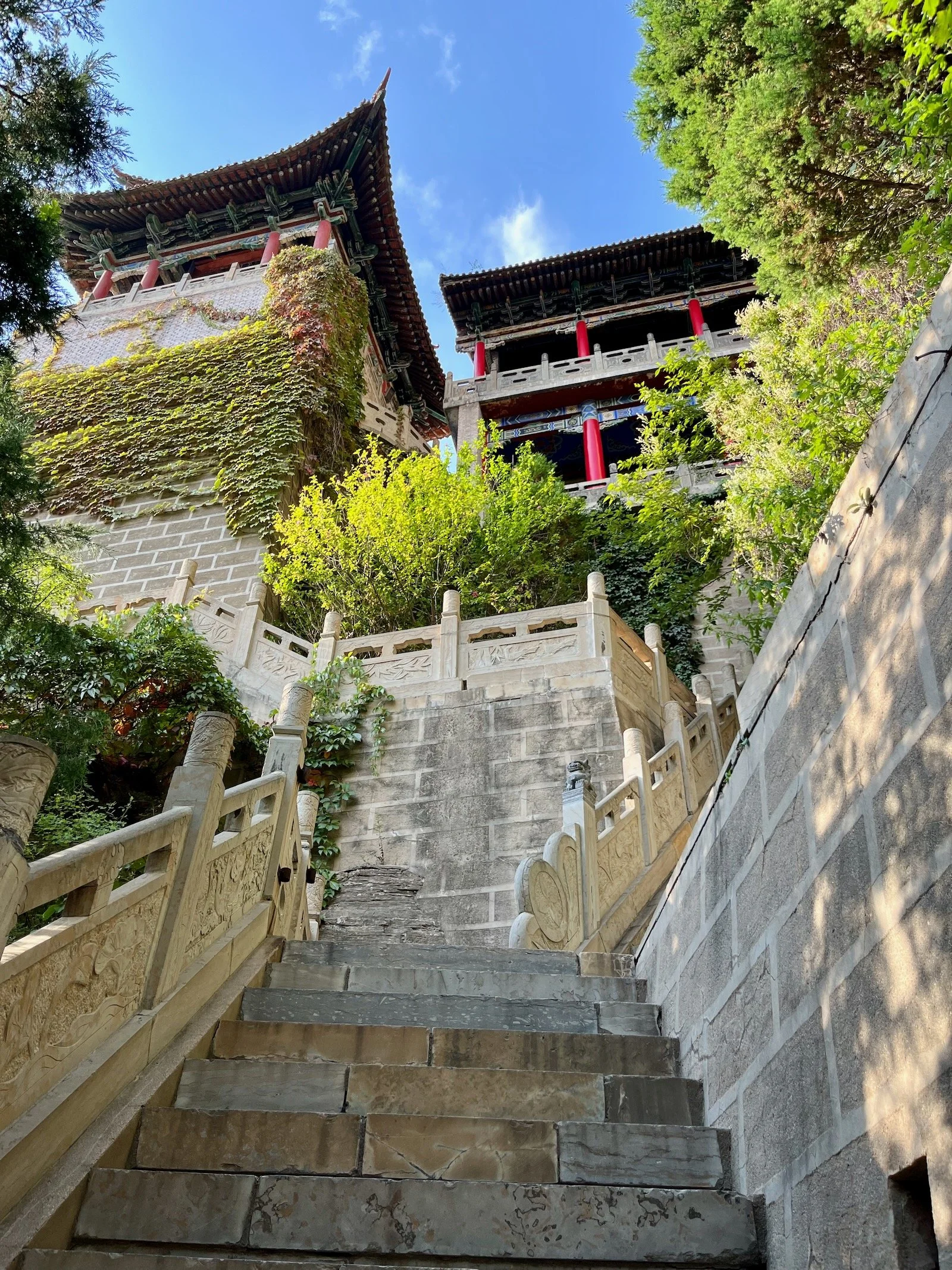

Hop on the bus to the next area: the Zhujia Hollow. This is the where Zhu Wusi, father of Ming Taizu Zhu Yuanzhang, sought solace and enlightenment, practicing his faith and paying homage to Lingbao Tianzun. Legend has it that Zhu Yuanzhang, upon ascending to the imperial throne, attributed his success to the divine intervention of the heavenly gods. In reverence, he embarked on a pilgrimage to Mianshan, accompanied by his cousin, to offer prayers and seek blessings.
During their visit, a gentle breeze swept through the air, causing hibiscus flowers to cascade from his cousin's head. To their astonishment, the fallen flowers took root and flourished, giving rise to the majestic hibiscus pine that stands as a symbol of resilience and renewal. In honor of this divine encounter, Zhu Yuanzhang dispatched his son Zhu Quan to Mianshan to oversee the restoration of the revered Lingbao Hall.
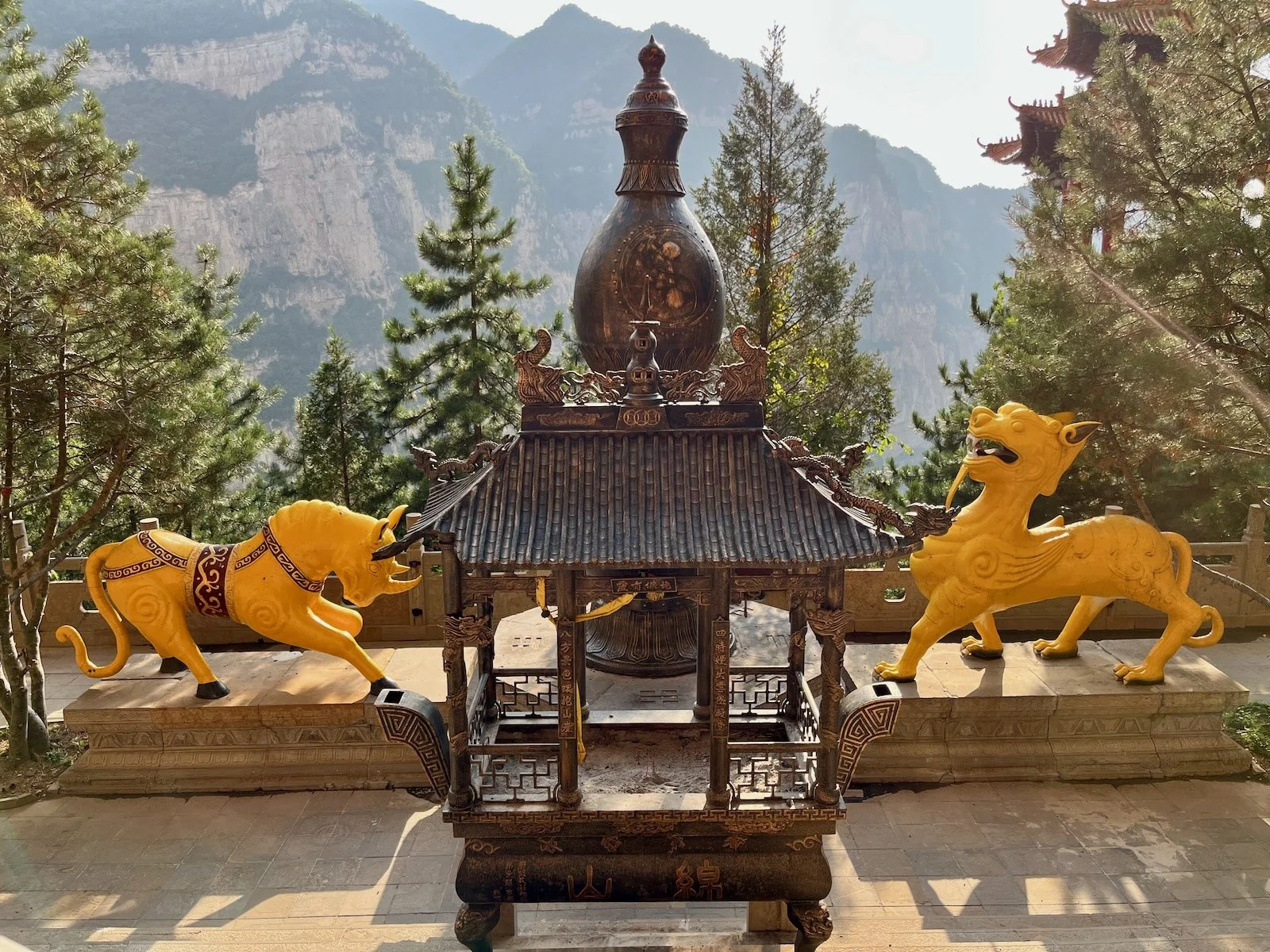
The serene and picturesque area was peacefully deserted by day's end, allowing us to enjoy its tranquillity. While there are a few temples around, the offerings for exploration are narrow, so we recommend skipping this area if you have limited time. However, it provides an ideal scenario for capturing idyllic photographs and appreciating the sunset.
11. Tiānqiáo or Sky Bridge


This ancient bridge is a remarkable architectural marvel that spans across a deep gorge, offering breathtaking views of the surrounding landscape. The Tianqiao Sky bridge was originally constructed during the Tang Dynasty (618-907 AD) and has been restored and renovated several times throughout history. It serves as a vital transportation route, connecting different parts of Mianshan and providing access to various scenic spots, temples, and hiking trails.
Visitors to Mianshan often flock to the Tianqiao to marvel at its engineering ingenuity and to enjoy the panoramic vistas from its elevated vantage point. Walking across the Sky Bridge is a thrilling experience, offering a sense of awe and adventure as you traverse the precipitous cliffs and rugged terrain of Mianshan.




Where to eat in Mianshan
If you're considering hiking this trail, we suggest bringing food with you, as the only available food vendors we encountered were located near the bus stops, and not all of them were open. There used to be restaurants but most of them were closed when we visited so don’t expect to find complete meals in the mountain.
Where to stay near Mianshan
If you’re planning to visit Pingyao, we recommend you to book your hotel in Pingyao and then arrange a day tour to Mianshan. The city offers great accommodation options, from the most traditional lodging to comfortable high-end hotels and has all the amenities that one needs, which are sometimes not easy to find in more remote locations like Mianshan.
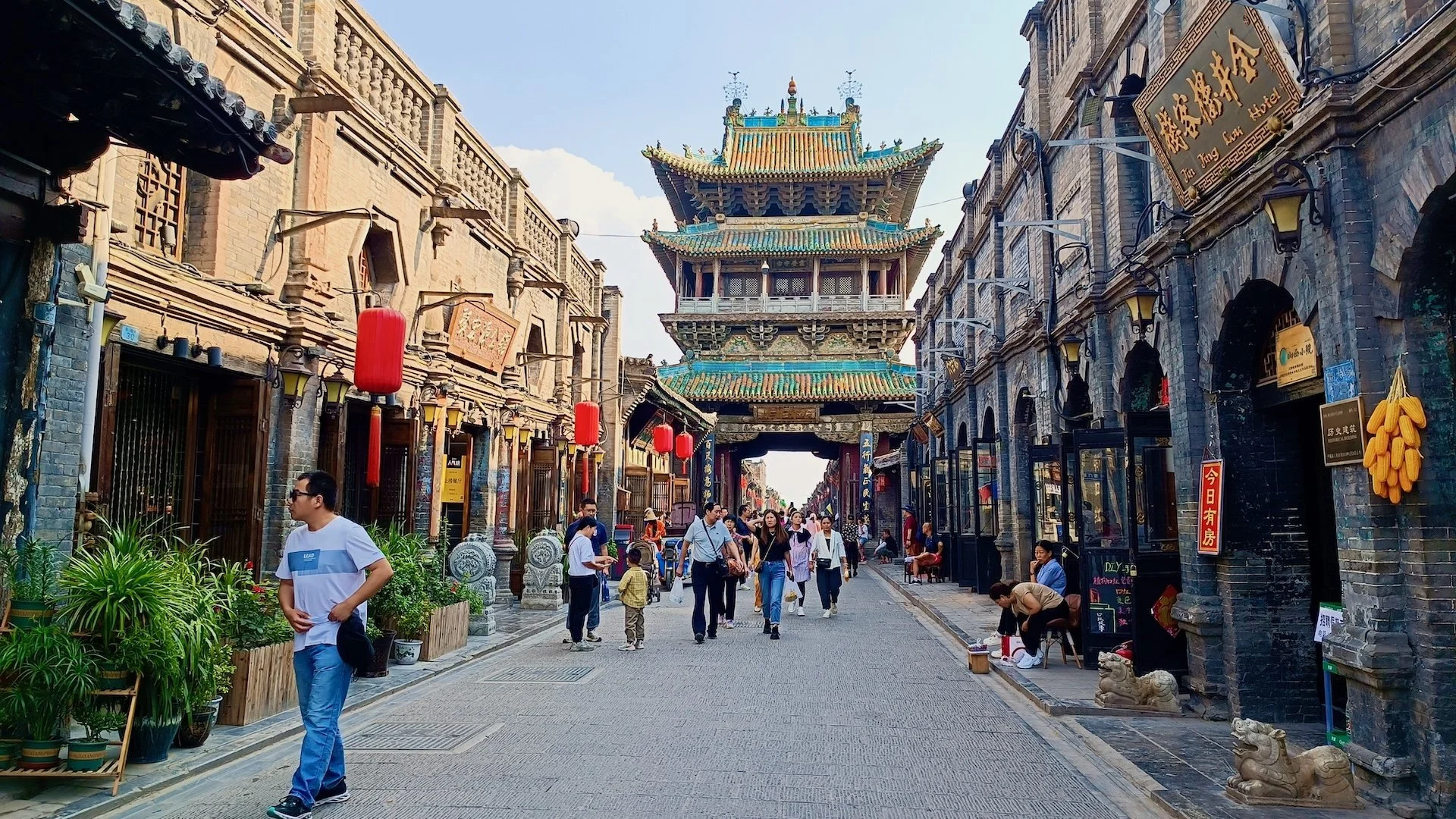
Pingyao is a well-preserved ancient town located in Shanxi province, China. This 5-A wonder and UNESCO World Heritage site is known for its ancient city wall, which dates back over 2,700 years, and its well-preserved traditional architecture. It you are interested in Chinese history and architecture it is worth combining with your trip to Mianshan with at least a day in Pingyao.


You can see some of the best hotels in Pingyao in the Ancient City Wall below:
Alternatively, if you would like to stay long in the Mianshan scenic area, you can stay at one of the hotels inside the scenic area, but it is not possible to book them in advance. You need to make your reservation at the entrance of the Mianshan scenic area, which is not guaranteed at times of great affluence.
If you prefer to be closer to Mianshan but rather have everything planned in advance we recommend staying at Jiexiu. This small friendly city is close to the mountain and easily reachable by train. From there you can take a bus or a cab to the mountain and there are plenty of good authentic places to eat. Just make sure the hotel you choose accepts foreigners because, in less touristic places, some hotels don’t have the required license and might reject you during check-in.
How to get to Mianshan
Localized on central Shanxi Province in North China, Mianshan is quite easy to access from Beijing or Xi’an by high speed train. The train station closest to Mianshan are Jiexiu and Jiexiu East. Booking your train tickets at least 2 days advance is advisable as they often sell out. You can easily book them online on Trip.com.
You can get to Jiexiu from Beijing in 3h 45min and it can cost from 232CNY in 2nd class to 715 CNY in business class.
From Xian to Jiexiu it takes about 3h and the cost vary between 145 CNY in 2nd class and 424 CNY in business class.
Pingyao is just 10 minutes away from Jiexiu and it can cost from 6 CNY to 10 CNY.
Once you reach the Jiexiu train station you can use the Didi app to get a driver or simply catch a taxi to the Mianshan scenic area.
A hassle-free alternative to get to Mianshan is through one of the many organized trips leaving from Pingyao. You can book them at ease with our partner Viator:
Best time to visit Mianshan
The best months to visit Mianshan (Mount Mian) typically span from April to October, offering visitors the best chance of clear skies and dry pathways. While fog may still envelop the mountain, particularly in the mornings, this only adds to the mystical ambiance of the landscape.
Current Weather in Jiexiu (closest city to Mount Mian)

Travel Tips
Mianshan Map
Although there are maps of the area at the multiple bus stops across the road, when doing the trails you will not find them. Having the Mianshan scenic area map has proven very useful while planning the trip and exploring the trails.
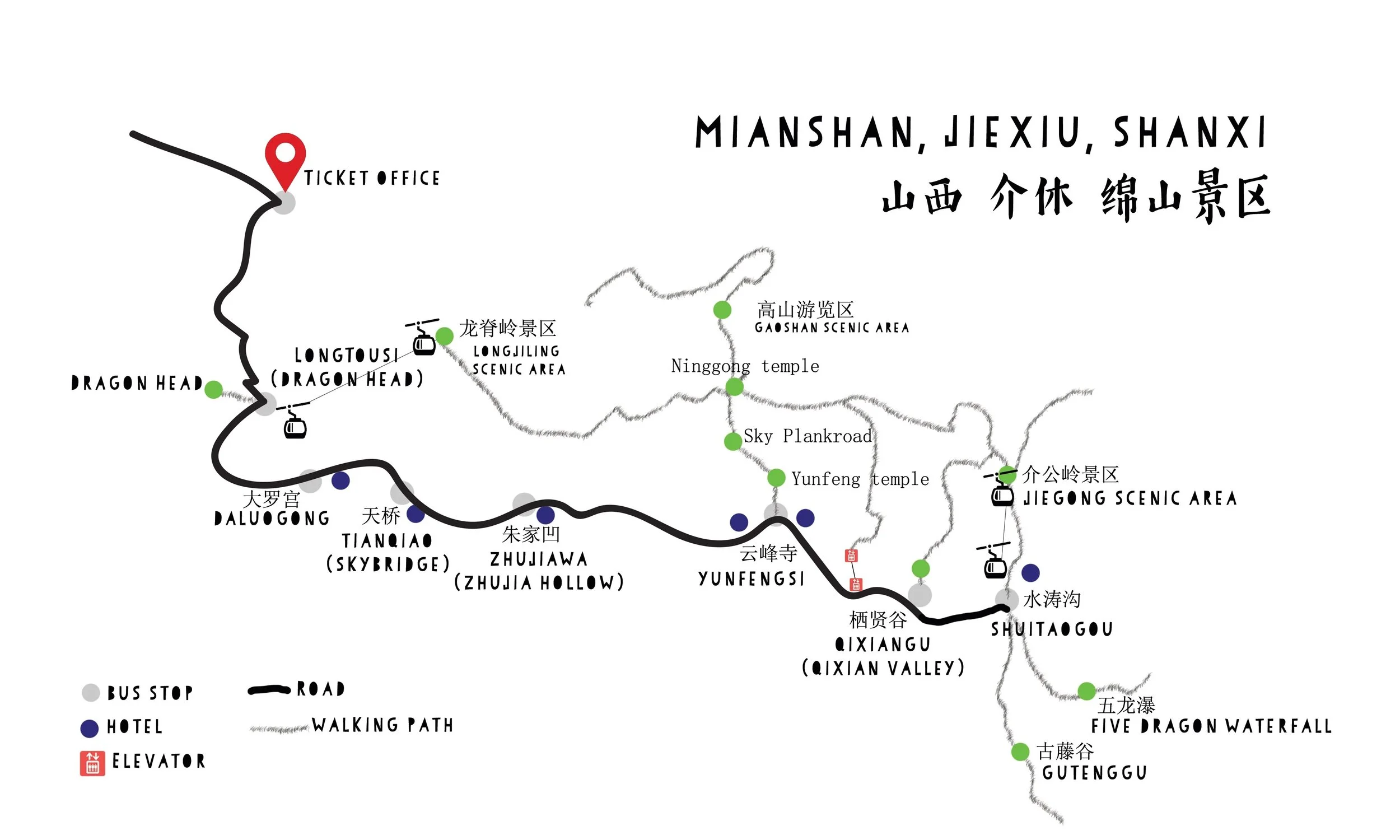
Map from tanpu2
We highly recommend purchasing the hop-on hop-off bus ticket, as it allows you to quickly move between different points of the mountain, maximizing your time. It cost only 50 CNY.
The price of the admission ticket during high season (April - October) is 110 CNY, while during the rest of the year it cost 90 CNY.
To find the best travel flight deals, compare prices across different airlines and providers, and book your ticket at the lowest price, we highly recommend using our Flight Price Comparator.
To book hotels and even trains in China from a foreign country, Trip.com is your best bet. It has a wide range of options and is much more affordable than a traditional travel agency.
Not all debit cards work in China, if you have a VISA or Mastercard, for instance you can only use your card in some hotels and in the Bank of China ATMs. Have money with you at all times or use WeChat to pay.
WeChat is incredibly useful while in China, not only you can use it to pay and to talk with your new Chinese friends, it also allows to do a myriad of other stuff such as translations or ordering a cab.
When traveling to the other side of the globe is always a good idea to get an insurance to cover any unpredictable issue that may occur. Good insurance options for your travel to China are Insubuy or VisitorsCoverage.
Having good access to internet during a trip is always crucial either to help you find your way to or to share your amazing photos along the way. It can however sometimes be a real headache. Universal physical cards like DrimSim can be an option. An incredible incredibly convenient alternative is airalo, a eSIM (card-free) service that allows you to top up if you need more. Additionally, airalo is connected to a VPN, which is highly recommended while in China as most of the non-Chinese websites will not be available.
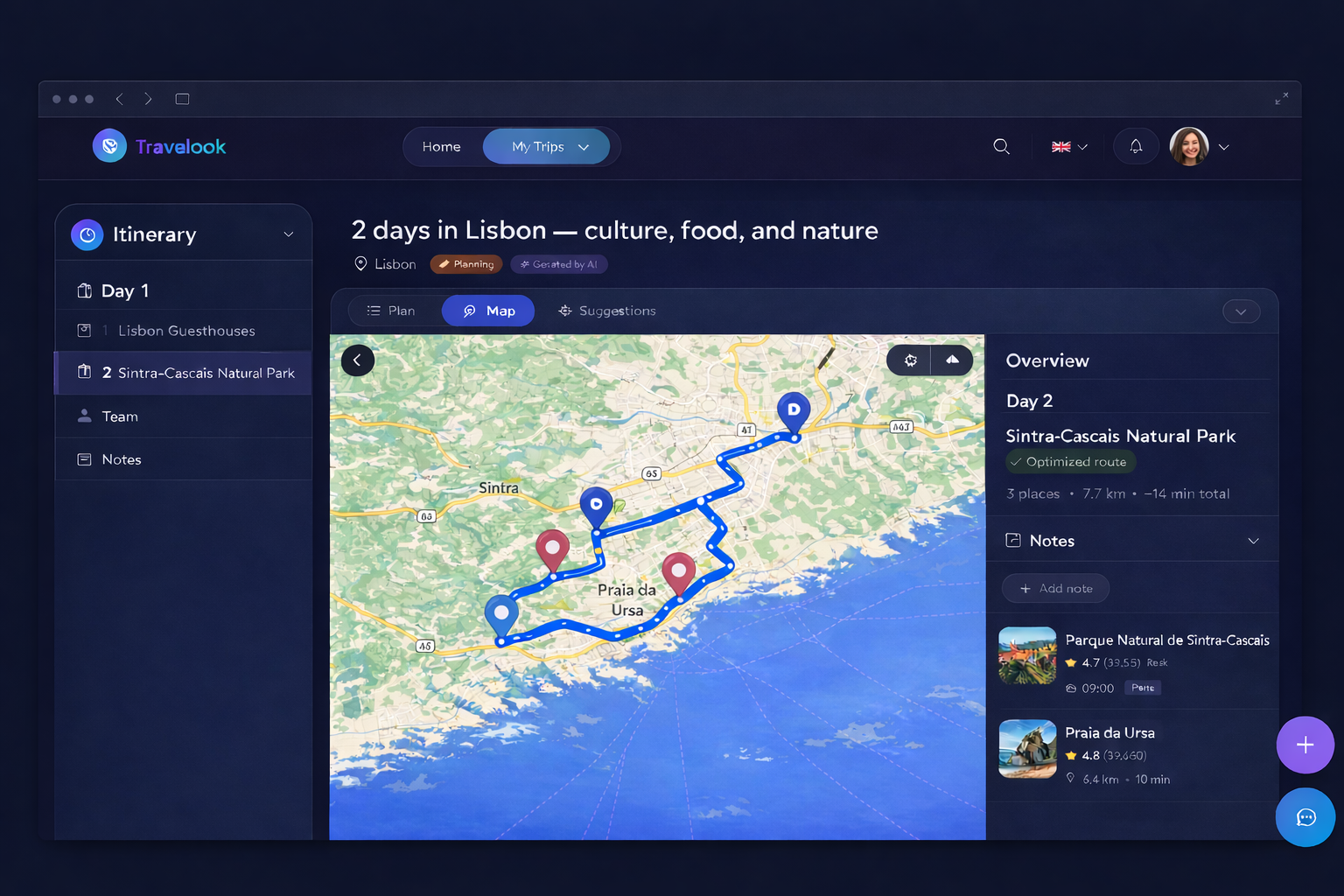
For additional ideas and suggestions for your trip to China use the Travelook app as your China trip planner. In the app, you'll discover this and many other trips and destinations in China shared by travelers from around the globe. The app uses also the power of AI to help you optimize your time and maximize your travel experience in China.
10 best travel tours in china
China, with its vast size, boasts some of the world's most breathtaking natural landscapes and awe-inspiring man-made wonders. While traveling in China is becoming more accessible for foreigners, challenges like the closed payment system and the need for a Chinese mobile number can make the experience daunting for international tourists.
To make exploring China easier and less stressful, we've curated a list of the top 10 best tours in China. These tours provide to different interests and preferences, offering options ranging from all-inclusive packages with private transfers, guides, and dining experiences, ensuring you can select the one that best suits your needs.
Is it worth visiting Mianshan
Mianshan offers a diverse range of attractions that cater to various interests, making it an appealing choice for travelers seeking adventure, cultural immersion, and natural beauty.
With its mix of enjoyable and moderately challenging trails, stunning natural landscapes, meticulously preserved architecture, and captivating religious structures, it provides a fulfilling experience for visitors. We highly suggest considering it for your itinerary, particularly if you plan to visit Xi'an or Pingyao.
Nearby attractions
Travelook Trip Planner
Plan smarter trips in one place with the new Travelook web experience.
Use Travelook to prepare your next journey:
- Get AI-generated recommendations
- Discover places on maps: attractions, restaurants, cafes, and more
- Book flights, tours, and attraction tickets
- Invite friends to collaborate on your itinerary
- Follow other travel enthusiasts for ideas and tips
Don’t forget to follows us!
Disclosure: Some of the links in this post may be affiliate links. This means that if you click on the link and make a purchase, we may receive a small commission at no extra cost to you. This helps us continue to provide valuable content and recommendations for our readers. Thank you for your support!

About 60 km from Chengdu, Dujiangyan is home to one of the oldest and most unique irrigation systems in China. Dating back over 2,200 years, it was designed to control flooding and distribute water to the fertile Chengdu Plain. This ingenious feat of hydraulic engineering is now a UNESCO World Heritage Site and continues to sustain the region's agricultural prosperity to this day. It is also the only surviving non-dam irrigation system from the ancient past.